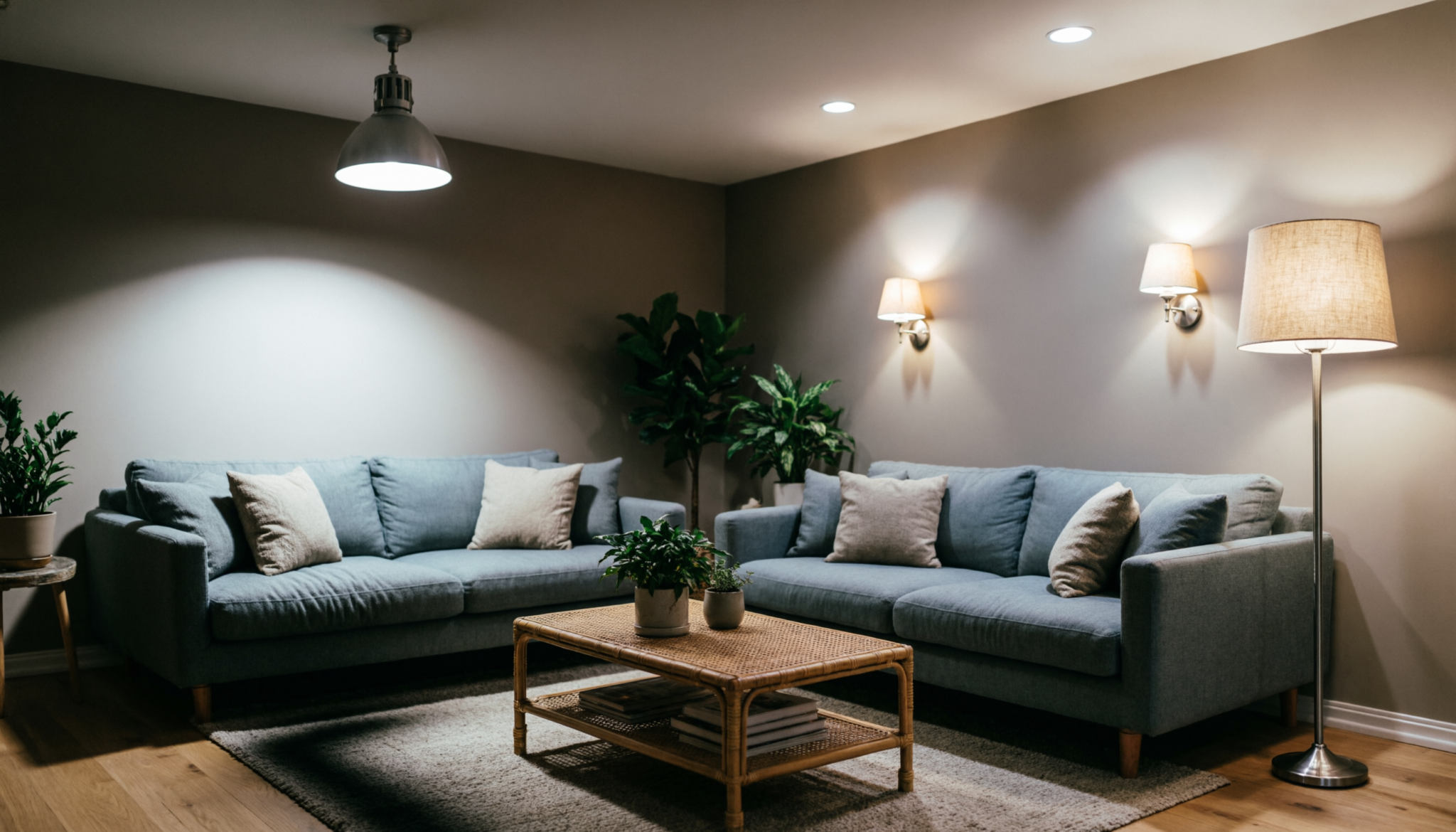
Light should feel like a gentle welcome, not a spotlight interrogation.
Proper lamp placement evens light across surfaces, fills dark corners, and reduces the hard shadows that make a room feel stark and uncomfortable.
The Short Answer
To eliminate harsh shadows, use the Triangulation Method: place three light sources at varying heights in a triangular pattern around the room.
This “criss‑cross” of beams fills shadow gaps that furniture and walls create.
Avoid a single strong lamp next to a dark wall, that contrast casts deep, sharp shadows and strains the eyes.
The Triangulation Method: A Step‑by‑Step Layout Guide
Start by imagining a triangle across your seating area:
- Primary Light: A floor lamp near the main seating, angled slightly toward the center of the room.
- Secondary Light: A table lamp on a side table opposite the floor lamp to balance brightness and reduce edge shadows.
- Accent Light: A smaller lamp or wall sconce that fills any remaining dark corner.
This layered pattern lets light wrap around objects, softening contrast and making shadows less noticeable.
Eye Level vs. Floor Level: The Importance of Vertical Variety
Shadows form when light is too directional. Mixing eye‑level and floor‑level lamps spreads illumination vertically:
- Eye‑Level Lamps (table or shelf lamps) fill gaps around furniture height.
- Floor‑Level Lamps spread light upward and outward into corners.
Varying heights means shadows from one source are washed out by another, keeping the room visually gentle and evenly lit.
Diffusers and Shades: How to Soften the “Hard Edge” of a Light Beam
Lamp shades and diffusers aren’t just style choices. They spread light across a wider area, reducing harsh beams that create deep shadows.
Choose shades made of light fabric or frosted glass that diffuse rather than focus light.
Lamps with built‑in diffusers scatter light smoothly, making every corner feel less contrasty.
Shadow Fix Table
| Common Shadow Problem | The Lamp Placement Solution |
|---|---|
| Dark corner shadows | Add a floor lamp angled toward the space |
| Sharp couch shadows | Place a table lamp opposite the main light |
| Shadowy wall edges | Position a small accent lamp near wall edges |
FAQs
1. How many lamps does a typical living room need?
Most living rooms benefit from at least three light sources: layered and placed in a triangle to fill shadows and balance brightness.
2. Should lamps match each other?
No. Lamps can vary in style and height. The goal is balanced light, not matching sets.
3. What bulb color reduces harsh shadows?
Warm white (around 2700K–3000K) softens contrast and feels more comfortable than cool, stark light.
Final Thought
Soft, even light makes a living room feel calm and welcoming. Position lamps at different heights and around key seating areas to eliminate deep shadows and create a space that feels bright without glare.