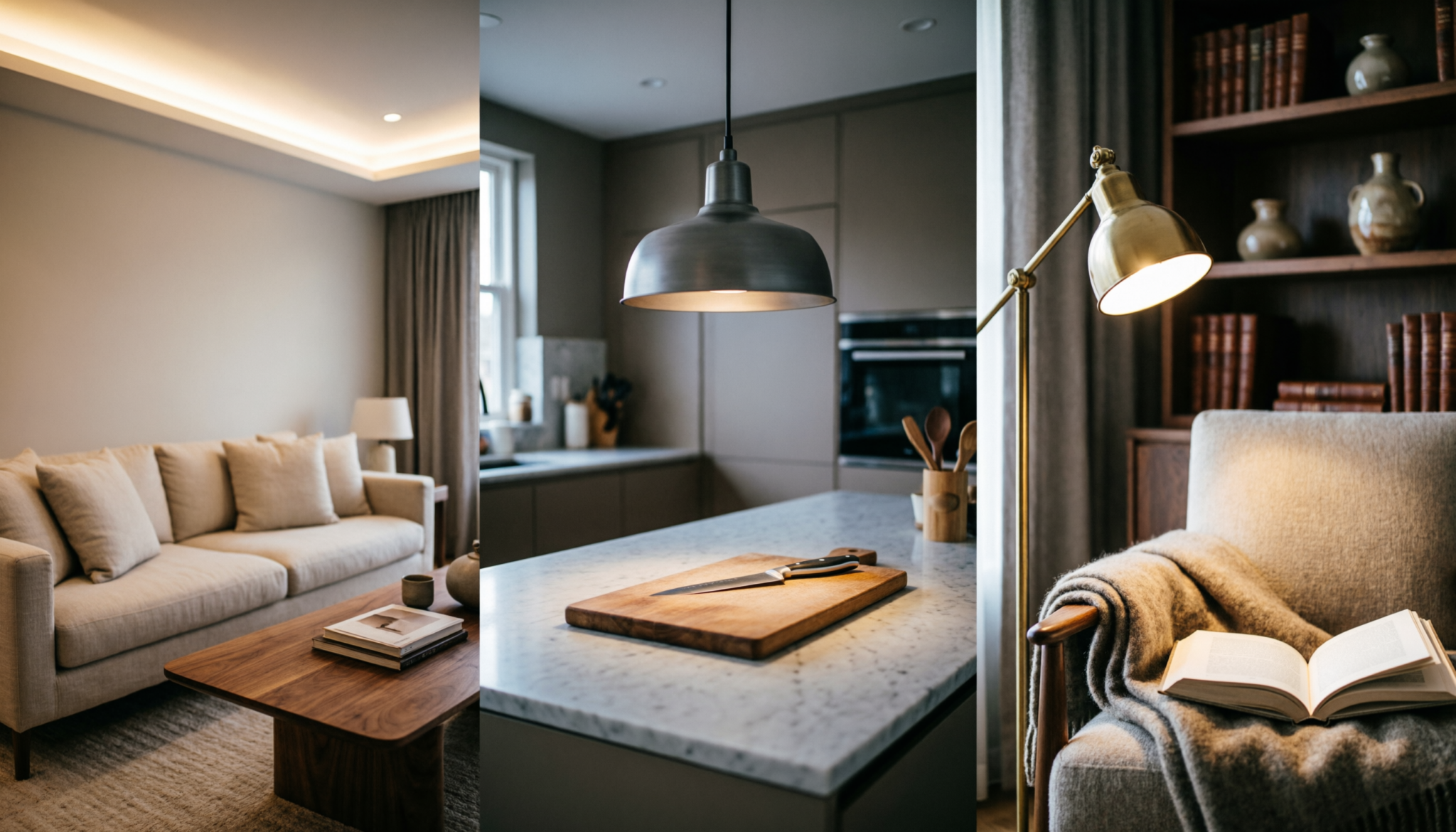
Balanced lighting depends on three layers working together. Ambient lighting fills the room with overall brightness, task lighting supports focused activities, and accent lighting adds depth and visual interest.
Relying on one source alone creates glare, dark corners, and a flat, uncomfortable room that feels unfinished.
Comparison Table
| Lighting Layer | Primary Outcome | Room Comfort | Long-Term Flexibility | Value Grade |
|---|---|---|---|---|
| Ambient Lighting | Overall room brightness | Prevents harsh shadows | Supports layout changes | A |
| Task Lighting | Focused visibility for activities | Reduces eye strain | Easy to adjust by activity | A+ |
| Accent Lighting | Adds depth and highlights features | Creates warmth and mood | Works with seasonal decor changes | A |
Layer 1: Ambient Lighting (The Foundation)
Ambient lighting carries the room. It fills in shadows, softens corners, and sets the base level of brightness. Without it, everything else feels patchy.
Ceiling fixtures, recessed lights, and large floor lamps usually handle this job. The mistake most homes make is stopping here. A single bright bulb in the center creates glare and leaves edges dim.
A better setup spreads light across the room. Think two or three sources instead of one. Warm bulbs keep the space calm, while dimmable options allow control at night.
Reliable picks:
- Govee Smart LED Bulbs 4-Pack. Strong ambient coverage with adjustable brightness
- Brightech Sky LED Torchiere Floor Lamp. Fills dark corners without harsh glare
- Philips Hue White A19 LED Bulbs. Consistent, long-lasting everyday lighting
Layer 2: Task Lighting (The Utility)
Task lighting solves a specific problem: seeing clearly where work happens. Reading, cooking, studying, or even folding laundry all need focused light.
Without task lighting, eyes strain and posture suffers. Overhead light rarely lands where needed, which leads to shadows on books, counters, and desks.
Placement matters more than brightness. Keep light close and directed. Adjustable arms or heads make a big difference.
Practical options that hold up over time:
- LEPOWER Metal Desk Lamp — simple, durable, and easy to position
- Ikea RANARP Work Lamp — focused beam with a stable base
- Glocusent LED Neck Reading Light — useful for late-night reading without lighting the whole room
Layer 3: Accent Lighting (The Drama)
Accent lighting adds depth. It draws attention to what matters and softens what does not. This layer is often skipped, which is why many rooms feel unfinished.
Accent light works best when subtle. It should guide the eye, not compete with the main lighting. Wall sconces, strip lights, and small spotlights do the job well.
Use it to highlight art, shelves, plants, or textured walls. Even a simple bookshelf gains depth with the right glow.
Well-loved accent choices:
- LITOM Rechargeable Wall Sconces Set . No wiring needed, easy to place anywhere
- Govee LED Strip Lights. Adds depth behind TVs, shelves, or beds
- GE Wireless LED Puck Lights. Quick fix for cabinets and display areas
The 3-Layer Room Audit: A Quick Check
Walk into the living room at night and pause.
- If only one switch controls all the light, a layer is missing
- If reading requires shifting positions, task lighting is weak
- If shelves and walls feel flat, accent lighting is absent
A complete room should allow light to change based on activity, not stay fixed.
Best Placement Guidelines
- Place desk lamps opposite the dominant hand to reduce shadows
- Install vanity lights at eye level instead of overhead only
- Position reading lamps slightly behind shoulder level
- Add under-cabinet kitchen lighting to eliminate counter shadows
Small placement adjustments dramatically improve usability.
Expert Opinion
Expert’s Tip: Avoid relying solely on recessed ceiling lights. Rows of bright downlights flatten a room and create facial shadows. Combine ceiling lighting with lamps at different heights.
Layered light sources create softer contrast, better depth, and a more comfortable atmosphere throughout the evening hours.
Accent Lighting Adds Depth and Character
Accent lighting exists for visual interest rather than primary illumination.
Without accent lighting, rooms often feel flat even when fully furnished. Accent lighting introduces contrast, highlights architectural details, and creates warmth after sunset.
Popular Accent Lighting Ideas
- Picture lights above artwork
- LED strip lighting on shelves
- Wall sconces beside mirrors
- Uplighting behind plants
- Cabinet interior lighting
- Toe-kick lighting in kitchens
- Fireplace accent lighting
Accent lighting works best when kept subtle. Overly bright accent fixtures compete with ambient lighting instead of complementing it.
Where Accent Lighting Works Best
Living Rooms
Use table lamps and wall sconces to soften seating areas.
Bedrooms
Install warm bedside lighting and indirect headboard illumination.
Dining Rooms
Pendant lighting paired with dim wall lighting creates better atmosphere than a chandelier alone.
Hallways
Accent lighting prevents narrow spaces from feeling tunnel-like.
How to Layer Lighting Correctly in Any Room
Start With Ambient Lighting First
Determine whether the room has balanced overall brightness. Fix dark corners before adding decorative lighting.
Add Task Lighting Based on Activities
Identify how the room functions daily.
- Reading
- Cooking
- Remote work
- Applying makeup
- Crafting
- Dining
Each activity requires targeted illumination.
Finish With Accent Lighting
Accent lighting should support the room’s mood, not overpower it.
Good accent lighting often goes unnoticed at first. The room simply feels warmer, deeper, and more inviting.
Dimmers Matter More Than Fixture Quantity
Many homes contain too many bright fixtures and not enough control.
Dimmers allow lighting adjustments throughout the day:
- Bright mornings
- Functional afternoon lighting
- Softer evening atmosphere
Without dimmers, rooms remain stuck at full intensity regardless of time or activity.
Install dimmers on:
- Dining room fixtures
- Living room ambient lighting
- Bedroom lighting
- Accent lighting zones
Simple dimmer upgrades often improve comfort more than replacing fixtures entirely.
FAQs
1. Can one light fixture handle all three layers?
No. One fixture can only serve one main purpose well. Trying to stretch it across all roles leads to poor lighting quality and uneven coverage.
2. What is the biggest lighting mistake in most homes?
Relying on a single overhead light. It creates glare, shadows, and a flat look that makes even well-furnished rooms feel incomplete.
3. How many lights should a living room have?
Most balanced rooms use 3–5 light sources across the three layers. Exact numbers depend on size, but variety matters more than quantity.
Final Thought
Good lighting is not about adding more fixtures. It is about placing the right light in the right spot. Once all three layers are present, a room feels easier to use, easier to relax in, and far more complete without changing anything else.