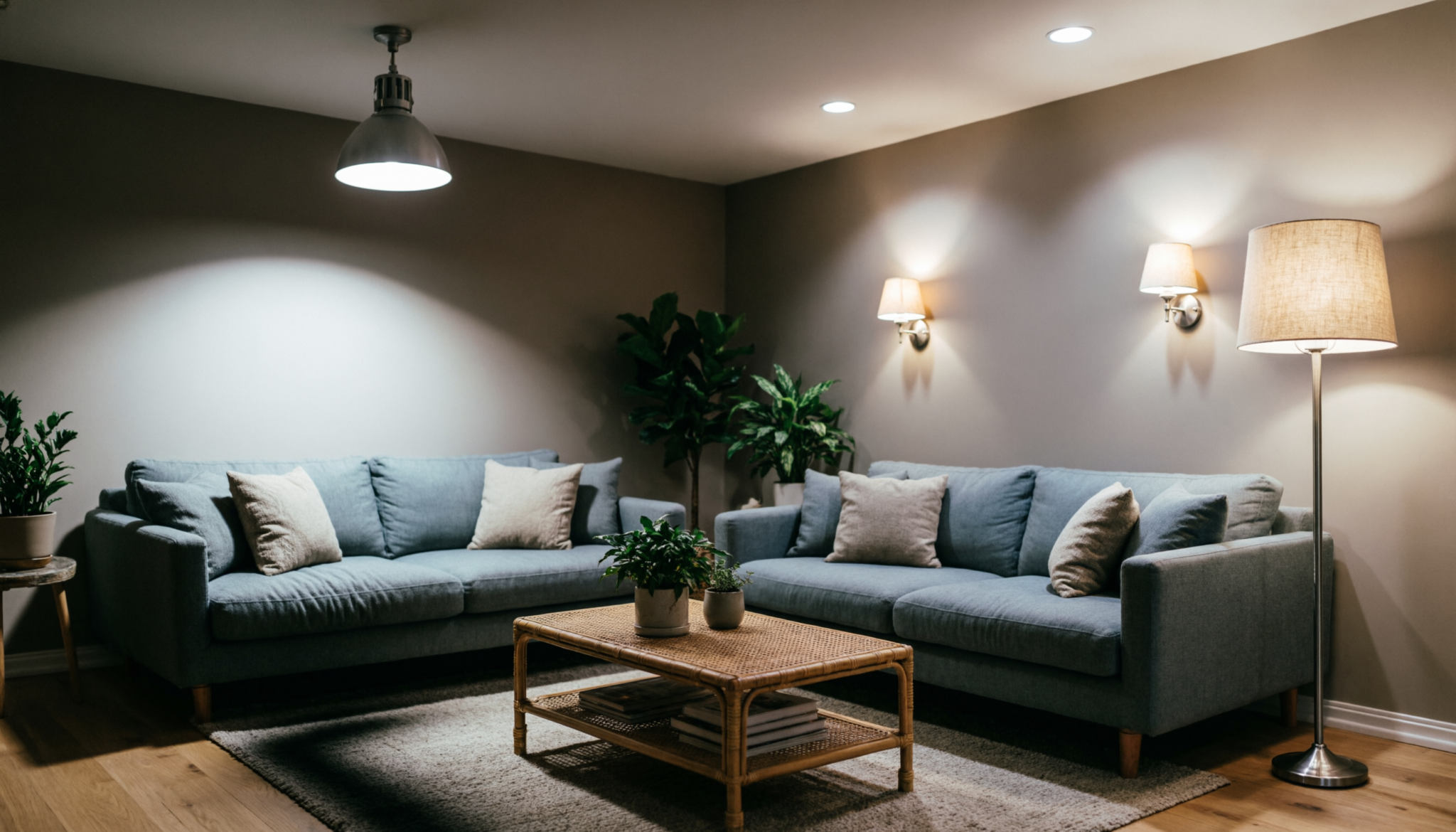
Spatial Logic Summary: Harsh shadows usually appear when a living room depends on a single overhead fixture or poorly balanced side lighting.
Proper lamp positioning requires layered light at varying heights, balanced brightness across seating zones, and indirect illumination near corners and walls.
Maintain clear sightlines between fixtures to prevent uneven light pockets and visual strain.
Comparison Table
| Lamp Placement Method | Shadow Reduction | Eye Comfort | Visual Balance | Best Use Case |
|---|---|---|---|---|
| Layered floor + table lamps | Excellent | High | Strong | Large living rooms |
| Single overhead lamp | Poor | Low | Weak | Temporary lighting only |
| Wall-wash lighting | Very Good | High | Excellent | Dark corners and artwork |
The Short Answer
To eliminate harsh shadows, use the Triangulation Method: place three light sources at varying heights in a triangular pattern around the room.
This “criss‑cross” of beams fills shadow gaps that furniture and walls create.
Avoid a single strong lamp next to a dark wall, that contrast casts deep, sharp shadows and strains the eyes.
The Triangulation Method: A Step‑by‑Step Layout Guide
Start by imagining a triangle across your seating area:
- Primary Light: A floor lamp near the main seating, angled slightly toward the center of the room.
- Secondary Light: A table lamp on a side table opposite the floor lamp to balance brightness and reduce edge shadows.
- Accent Light: A smaller lamp or wall sconce that fills any remaining dark corner.
This layered pattern lets light wrap around objects, softening contrast and making shadows less noticeable.
Why Harsh Shadows Appear in Living Rooms
Most harsh shadows come from one of three lighting mistakes:
- A single ceiling fixture placed at the center of the room
- Lamps positioned too low beside seating
- Bulbs with excessive brightness or cool color temperature
Strong directional light creates sharp contrast between illuminated and dark areas. This effect exaggerates furniture edges, deepens facial shadows, and creates visual fatigue during evening use.
Large furniture pieces also block light flow. Sectionals, tall bookshelves, and oversized armchairs create “dead zones” where shadows collect.
Rooms with dark wall colors amplify the issue because darker surfaces absorb more light instead of reflecting it.
Window placement matters too. Daylight from one side of the room combined with a bright lamp on the opposite side can create competing shadow lines that feel visually chaotic.
The solution requires layered lighting instead of concentrated lighting.
The Best Lamp Heights for Balanced Lighting
Lamp height directly affects shadow softness.
A lamp positioned too low creates upward shadows across faces and walls. A lamp positioned too high creates intense downward contrast similar to overhead office lighting.
Use these placement standards for balanced illumination:
Table Lamps
- Bottom of lampshade should sit near eye level when seated
- Typical height: 24 to 34 inches
- Best for side tables beside sofas and chairs
Floor Lamps
- Shade opening should sit slightly above seated eye level
- Typical height: 58 to 64 inches
- Best for corners and sectional ends
Accent Lamps
- Keep below shoulder height
- Use warm bulbs under 500 lumens
- Best for shelves, consoles, and layered ambiance
Matching lamp heights across the room prevents uneven brightness.
One extremely bright tall lamp paired with several dim low lamps creates imbalance and scattered shadow lines.
Warm bulbs between 2700K and 3000K soften edges better than cool white bulbs. Cool lighting sharpens shadows and creates a clinical appearance unsuitable for most living rooms.
Where to Place Floor Lamps for Even Light Distribution
Floor lamps work best when placed near room edges rather than directly behind seating.
Correct placement allows light to bounce off walls and ceilings before reaching the center of the room. This indirect spread softens shadows naturally.
Ideal Floor Lamp Positions
Behind Accent Chairs
Place slightly behind and beside the chair instead of directly overhead. This creates soft side illumination without facial glare.
Corners with Dark Walls
Dark corners absorb light and visually shrink the room. Positioning a torchiere or shaded floor lamp near corners brightens vertical surfaces and reduces heavy shadow buildup.
Beside Sectionals
Large sectionals often create dense shadow pockets at the ends. A floor lamp placed near the open side balances brightness across the seating area.
Avoid placing floor lamps:
- Directly in front of televisions
- Behind reflective glass tables
- Too close to artwork with glossy finishes
These placements create glare instead of softness.
Expert’s Tip: Position floor lamps so the light grazes walls instead of pointing directly into the room. Indirect bounce lighting softens contrast far better than exposed bulbs.
Frosted shades and linen drum shades create cleaner diffusion than clear glass or exposed Edison bulbs, especially in living rooms with dark furniture and textured walls.
How Table Lamps Reduce Shadow Pockets
Table lamps create localized balance. They fill gaps that overhead lighting misses.
Without table lamps, seating areas often appear visually detached from the rest of the room. Small pools of light near sofas and side tables connect the layout and soften transitions between bright and dark zones.
Best Table Lamp Strategies
Use Pairs for Symmetry
Matching lamps on both sides of a sofa create balanced illumination and reduce directional shadows.
Light the Opposite Side of Windows
Natural daylight creates directional contrast during late afternoon hours. Table lamps placed opposite windows balance the shift.
Use Wide Shades
Narrow shades create spotlight effects. Wide drum shades spread light more evenly across nearby surfaces.
Common Mistakes
- Tiny lamps beside oversized furniture
- Bulbs brighter than 1000 lumens
- Bare bulbs without diffusers
- Uneven lamp spacing
The eye notices imbalance quickly. One bright side of the room paired with one dark side creates tension even when furniture placement appears correct.
Layered Lighting Techniques That Create Soft Living Rooms
Professional-looking living rooms rarely depend on one light source.
Layered lighting combines:
- Ambient lighting
- Task lighting
- Accent lighting
Each layer serves a different purpose.
Ambient Lighting
Creates overall room brightness.
Examples:
- Ceiling fixtures
- Torchiere lamps
- Large floor lamps
Task Lighting
Supports activities like reading or conversation.
Examples:
- Table lamps
- Swing-arm lamps
- Adjustable floor lamps
Accent Lighting
Adds depth and softness.
Examples:
- Picture lights
- Shelf lighting
- Small decorative lamps
The strongest rooms blend all three layers without allowing any single source to dominate.
Use dimmers whenever possible. Evening lighting should feel softer than daytime lighting. Overly bright nighttime rooms flatten texture and exaggerate shadows around furniture edges.
Reflective surfaces also help:
- Mirrors bounce light deeper into the room
- Satin paint reflects more softly than matte paint
- Light-colored rugs reduce heavy floor shadows
Avoid highly polished surfaces directly across from lamps. Excess reflection creates glare hotspots that strain the eyes.
FAQs
1. How many lamps should a living room have?
Most living rooms need at least three light sources. Large rooms often require five or more layered fixtures to prevent dark corners and uneven brightness.
2. What bulb color reduces harsh shadows best?
Warm white bulbs between 2700K and 3000K soften shadows and create comfortable evening lighting. Cooler bulbs sharpen contrast and create harsher edges.
3. Should floor lamps face upward or downward?
Upward-facing lamps soften rooms by bouncing light off ceilings and walls. Downward-facing lamps work better for reading zones and task lighting.
Final Take
Balanced living room lighting depends on placement more than brightness. Proper lamp height, layered illumination, and indirect wall bounce reduce harsh shadows and improve visual comfort.
Avoid relying on one ceiling fixture alone. Soft lighting from multiple controlled sources creates a calmer room, stronger furniture definition, and a more polished interior atmosphere.