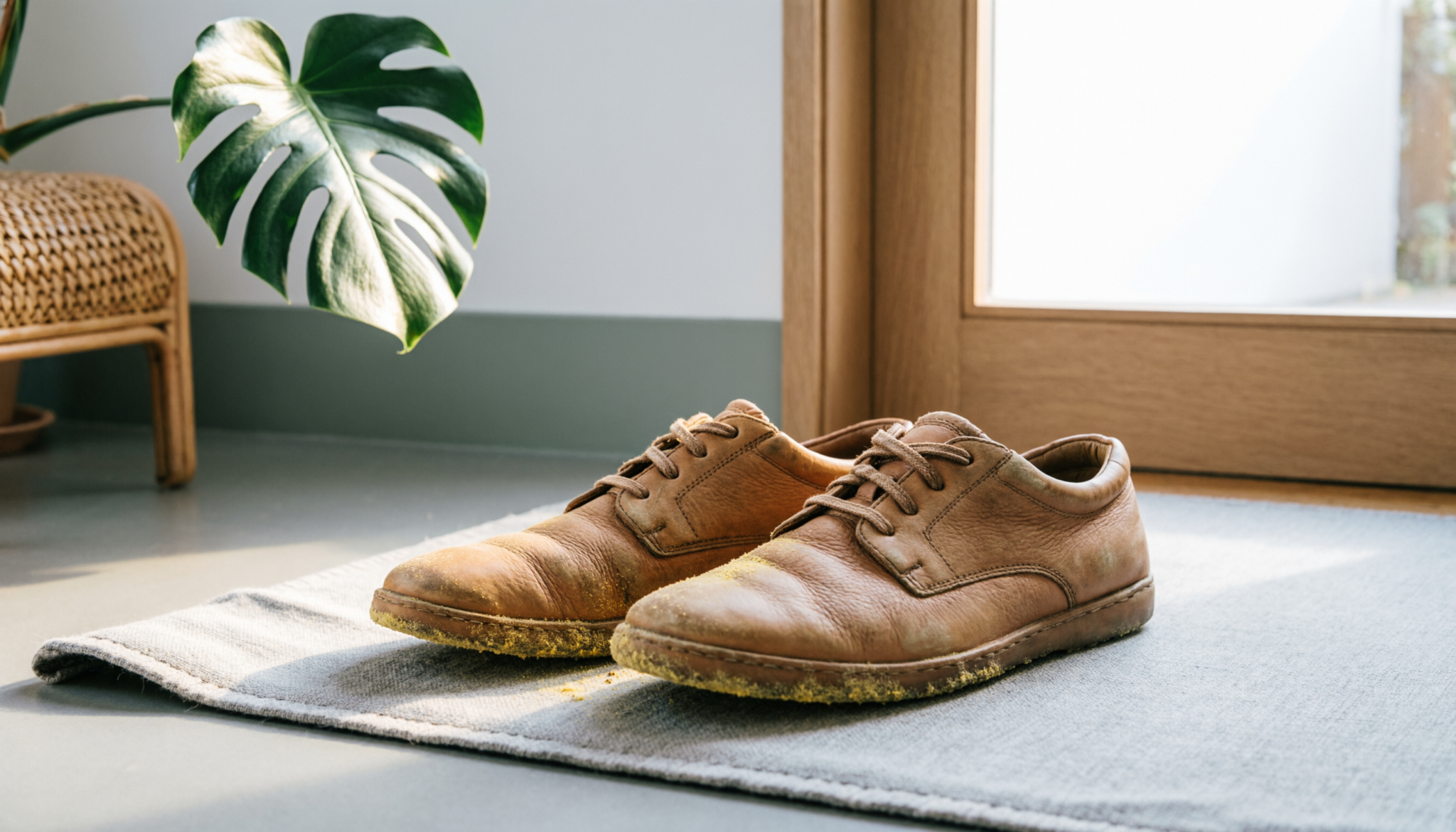
Outdoor pollen clings to shoe soles, laces, fabric fibers, and floor dust.
Bedroom contamination follows repeated indoor foot traffic, raising nighttime allergen exposure, nasal irritation, airway inflammation, and sleep disruption across allergy-sensitive households.
Bedroom pollen contamination often begins at floor level. Shoe soles carry grass, tree, and weed pollen directly onto carpets, rugs, and bedding zones.
Repeated indoor traffic increases airborne allergen circulation during sleep hours.
Strict shoe-removal routines, entryway containment systems, and aggressive floor cleaning significantly reduce indoor pollen accumulation and nighttime respiratory irritation.
Comparison Table
| Entry Source | Main Contamination Zone | Air Quality Impact | Recommended Control |
|---|---|---|---|
| Outdoor shoes | Bedroom flooring | Elevated pollen circulation | Entryway shoe removal |
| Fabric sneakers | Carpet fibers | Long-term allergen buildup | Weekly deep cleaning |
| Mud-covered soles | HVAC dust movement | Increased airborne particles | Hard-floor damp mopping |
| Athletic footwear | Under-bed dust reservoirs | Nighttime nasal irritation | Closed shoe storage |
Bedroom Floor Traffic Raises Allergen Exposure
Pollen particles rarely remain outdoors.
Shoe soles collect microscopic debris from sidewalks, lawns, parking lots, school entrances, office corridors, and public transport flooring. Indoor transfer begins immediately after entry.
Bedroom contamination develops through repetitive traffic patterns. Hallways act as distribution channels.
Carpet fibers trap pollen granules deep below surface level. Mattress edges, bed skirts, curtains, and under-bed dust reservoirs gradually accumulate allergenic particles.
Nighttime exposure creates a separate respiratory problem. Reduced airflow, enclosed sleeping environments, and prolonged inhalation periods intensify allergen contact across nasal passages and upper airways.
Morning congestion, dry throat symptoms, itchy eyes, and overnight coughing frequently trace back to bedroom contamination rather than outdoor exposure alone.
Shoes with textured soles create higher contamination rates. Running shoes, hiking footwear, canvas sneakers, and work boots contain grooves that trap larger pollen volumes.
Moisture from grass, soil, or rain further increases particle adhesion.
Hard flooring reduces retention compared with carpeted bedrooms. Tile, vinyl, sealed hardwood, and laminate surfaces allow easier removal through damp cleaning methods.
Thick rugs and high-pile carpets create long-term allergen reservoirs that resist standard vacuuming.
Carpet Fibers Trap Massive Pollen Quantities
Bedroom carpets function like dense filtration systems.
Every footstep compresses pollen particles deeper into fibers. Walking movement later releases fragments back into the air.
High-traffic zones near beds contain the greatest contamination concentration. Repeated friction breaks pollen into smaller particles capable of remaining airborne longer.
Smaller particles travel deeper into respiratory passages and often trigger stronger allergy symptoms.
Vacuum limitations create another issue. Standard vacuum systems without sealed HEPA filtration frequently redistribute fine allergens instead of removing them completely.
Exhaust airflow pushes microscopic particles back into circulation.
Humidity worsens retention. Damp indoor conditions cause pollen fragments to bind tightly to fabric materials, rugs, curtains, and upholstered furniture.
Bedrooms with poor ventilation experience slower particle breakdown and prolonged contamination cycles.
Pet movement compounds the problem.
Fur carries pollen from contaminated flooring onto bedding surfaces, sofas, and pillows. Indoor cats and dogs amplify allergen distribution even without outdoor exposure during peak pollen seasons.
Low-profile washable rugs reduce accumulation compared with thick carpeting. Smooth surfaces limit particle penetration and improve cleaning efficiency during seasonal allergy spikes.
Expert Opinion: Indoor Allergen Containment Matters
Entryway containment systems remain among the most effective indoor air quality interventions. Shoe removal prevents continuous pollen migration into sleeping areas.
Consistent floor sanitation, sealed HEPA vacuum systems, low-humidity environments, and washable textile materials reduce long-term allergen reservoirs and improve nighttime respiratory comfort during peak seasonal pollen cycles.
Entryway Shoe Storage Prevents Pollen Spread
Front-door habits shape indoor air quality more than most households realize. Shoes abandoned near bedrooms continue releasing debris for hours after outdoor exposure.
Contained storage systems reduce migration. Closed cabinets, washable trays, boot mats, and designated mudroom zones isolate contaminated footwear away from sleeping spaces.
Ventilated storage also reduces moisture buildup that encourages dust accumulation.
Bedroom shoe storage creates hidden contamination. Closets, under-bed shoe bins, and open racks release trapped pollen each time footwear shifts or moves.
Fabric shoes worsen the problem because woven materials retain fine particles longer than leather or rubber surfaces.
Sole cleaning helps but rarely removes all contamination. Bristle mats reduce coarse debris, yet microscopic pollen fragments remain embedded within grooves and stitching.
Sock-only indoor policies reduce particle transfer significantly. Barefoot walking across contaminated flooring, however, still allows indirect exposure through disturbed dust movement.
Laundry practices also matter. Bedroom socks, pajama cuffs, and bedding edges collect floor-level allergens over time. Hot-water washing cycles improve removal compared with cold-water cleaning.
Nighttime Air Circulation Increases Symptom Severity
Bedroom airflow changes pollen behavior. Ceiling fans, portable fans, and HVAC systems continuously disturb settled particles across floors and fabric surfaces.
Sleep environments increase vulnerability because respiratory exposure lasts several uninterrupted hours. Even low pollen concentrations become problematic during extended nighttime inhalation periods.
Open windows worsen indoor pollen counts during seasonal peaks. Evening breezes often carry tree, grass, and weed pollen indoors where particles settle onto mattresses, pillows, and curtains overnight.
Air purifiers improve conditions only when paired with source control. Continuous shoe-based contamination overwhelms filtration systems over time. Prevention always outperforms reactive cleaning.
Humidity management remains critical. Indoor moisture levels between 40 and 50 percent help reduce dust accumulation while limiting static conditions that keep particles airborne longer.
HEPA-filter vacuums remove fine particles more effectively than standard models. Slow vacuum passes improve extraction from carpets and rugs. Rapid movement leaves embedded allergens behind.
Frequent bedding sanitation further reduces exposure. Pillowcases, mattress protectors, and blankets accumulate airborne pollen fragments during sleep cycles. Weekly hot-water washing lowers allergen concentration substantially.
FAQs
1. Can shoes really worsen indoor allergies?
Yes. Outdoor footwear transports pollen, mold spores, soil particles, and roadside dust directly into indoor living spaces. Repeated traffic increases allergen buildup across carpets and bedroom flooring.
2. Which shoes carry the most pollen indoors?
Running shoes, hiking boots, mesh sneakers, and heavily textured soles trap the highest pollen volume. Fabric materials and deep tread patterns increase particle retention.
3. Does removing shoes actually improve air quality?
Yes. Shoe-removal routines reduce floor contamination, airborne allergen circulation, and dust redistribution. Combined with HEPA cleaning and humidity control, indoor respiratory irritation often declines noticeably.
Final Take
Bedroom allergy problems frequently begin at the front door rather than outdoors alone. Shoe soles function as constant pollen transport systems inside enclosed living spaces.
Carpet retention, nighttime airflow, and repeated indoor traffic amplify exposure during sleep hours.
Structured shoe containment, hard-surface cleaning, HEPA filtration, and disciplined entryway routines create measurable indoor air quality improvement.