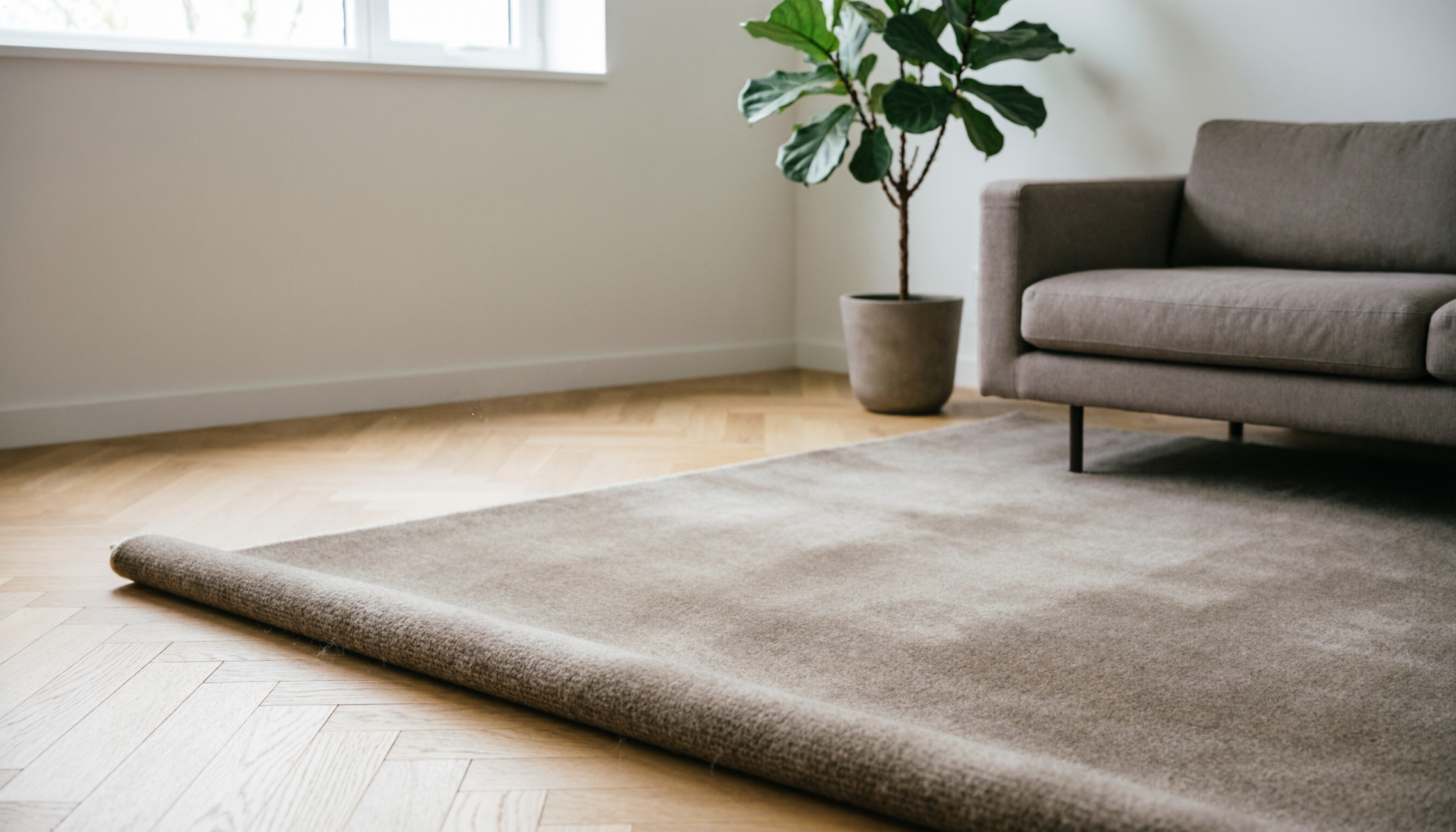
Indoor dust rarely floats for long. Carpet fibers trap skin flakes, textile fragments, soil particles, pollen, pet dander, and combustion residue deep below visible surface layers.
Wall-to-wall carpet functions like a dense particulate reservoir. Fiber structure, static charge, moisture retention, and repeated foot pressure trap and recirculate indoor dust continuously.
Poor vacuum filtration, infrequent deep cleaning, and high humidity increase airborne particle exposure, reduce indoor air quality stability, and accelerate allergen accumulation throughout occupied living spaces.
Comparison Table
| Carpet Dust Source | Retention Mechanism | Indoor Air Quality Effect | Highest Risk Areas |
|---|---|---|---|
| Skin flakes and fabric fibers | Static attraction inside carpet pile | Continuous particulate recirculation | Bedrooms |
| Outdoor soil and pollen | Deep fiber embedding from foot traffic | Elevated allergen concentration | Entryways |
| Pet dander and hair fragments | Oil-based adhesion to carpet strands | Respiratory irritation potential | Living rooms |
Carpet Fibers Trap Airborne Particle Residue
Carpet acts as a layered filtration surface. Unlike hard flooring, carpet pile captures particles below immediate visual range.
Dust accumulation begins with microscopic material: dead skin cells, clothing fibers, pollen grains, cooking residue, soot, and outdoor soil.
Every walking cycle forces particles deeper into the pile structure. Dense synthetic fibers create friction and electrostatic attraction that hold contaminants tightly against the backing layer.
Plush carpet increases retention because longer fibers create more surface area for particulate attachment.
Vacuuming removes only a percentage of embedded debris. Standard upright vacuums without sealed HEPA filtration often release fine particles back into indoor air during operation.
Surface appearance creates false confidence because large debris removal rarely addresses embedded fine particulate matter below 10 microns.
High-humidity environments worsen retention. Moisture causes airborne dust to cling more aggressively to carpet fibers.
Organic particles also absorb humidity, increasing particle weight and reducing natural air movement removal.
Dust concentration commonly rises in:
- Bedrooms with infrequent ventilation
- Hallways with constant foot traffic
- Living rooms containing upholstered furniture
- Homes with indoor pets
- Spaces near entry doors and windows
Carpet padding adds another contamination layer. Fine dust penetrates beyond surface fibers into underlayment material where standard vacuum suction loses effectiveness.
Daily Foot Traffic Reactivates Embedded Dust
Dust inside carpet rarely stays stationary. Walking pressure compresses carpet fibers and releases fine particulate clouds upward into breathing zones.
Indoor air sampling frequently shows higher airborne particle counts immediately after movement across carpeted surfaces.
This reactivation process explains persistent dust buildup on furniture despite routine cleaning.
Particle release increases under several conditions:
- Dry indoor air
- High occupant activity
- Low-efficiency HVAC filtration
- Dense textile furnishings
- Poor vacuum maintenance
Children face higher exposure levels because breathing height remains closer to carpet surfaces where disturbed particles concentrate most heavily.
Pet movement amplifies recirculation further. Fur, dander, litter residue, and outdoor contaminants continuously enter carpet fibers through repeated movement patterns.
Carpeted staircases become especially problematic because downward pressure drives contaminants deeper into compressed fiber layers.
Airflow patterns also matter. Ceiling fans, portable fans, and forced-air HVAC systems lift loosened carpet dust into wider circulation.
Weak return-air filtration allows repeated redistribution throughout connected rooms.
Visible dust represents only a fraction of total particulate load. Most harmful indoor particles remain microscopic and invisible under normal lighting conditions.
Expert Insight
Indoor carpet systems function less like flooring and more like particulate storage reservoirs. Dust accumulation reflects airflow quality, filtration efficiency, humidity control, occupant density, and cleaning frequency.
High-pile carpet combined with low-efficiency vacuum equipment creates continuous airborne particle recirculation that weakens respiratory comfort and long-term indoor air stability.
Vacuum Technique Determines Dust Removal Efficiency
Vacuum frequency alone does not guarantee effective dust reduction. Equipment design, airflow strength, filtration quality, and brush-roll agitation determine actual particulate extraction performance.
Many residential vacuums remove visible debris while leaving fine particulate layers untouched. Weak seals allow microscopic dust leakage through exhaust vents during operation.
Low-cost vacuum bags also reduce containment efficiency once partial clogging begins.
Effective carpet dust removal depends on:
- Sealed HEPA filtration
- Slow overlapping vacuum passes
- Strong suction consistency
- Correct brush height adjustment
- Frequent filter replacement
Fast vacuuming reduces extraction depth because suction contact time decreases. Multiple slow passes improve removal from dense carpet pile significantly.
High-pile carpet presents additional challenges. Long fibers trap fine dust beneath compressed layers where standard suction loses effectiveness.
Thick padding compounds the issue by absorbing deeply embedded particles beyond normal reach.
Professional hot-water extraction helps remove contaminants unreachable through dry vacuuming alone. Heated water loosens oily residue that binds fine dust to carpet fibers.
However, excessive moisture or poor drying practices may worsen microbial growth risk.
Humidity control remains critical after deep cleaning. Damp carpet creates favorable conditions for dust mite proliferation and microbial contamination.
Hard Flooring Reduces Long-Term Dust Retention
Hard flooring changes dust behavior dramatically. Wood, tile, vinyl, and sealed concrete surfaces allow easier particulate removal because contaminants remain exposed rather than embedded.
Dust still accumulates on hard flooring, but removal efficiency increases substantially through damp mopping and high-filtration vacuum systems.
Carpeted environments typically retain:
- More allergens
- More biological debris
- More combustion residue
- More textile fiber fragments
- More moisture-sensitive contaminants
Low-traffic homes may tolerate limited carpet use without severe indoor air degradation. High-occupancy households, pet-heavy homes, and humid climates face greater particulate retention challenges.
Bedroom carpeting deserves particular scrutiny because overnight breathing exposure lasts several uninterrupted hours.
Mattress textiles, bedding fibers, and carpet combine into concentrated dust reservoirs within enclosed sleeping spaces.
Mixed-flooring layouts often provide better air quality balance.
Hard flooring in high-traffic zones reduces particulate accumulation while area rugs allow easier cleaning and replacement compared to wall-to-wall carpet installations.
Ventilation quality also affects dust persistence. Homes with poor outdoor air exchange trap recirculated particles longer, increasing carpet contamination rates over time.
FAQs
1. Why does carpet hold more dust than tile?
Carpet fibers trap particles below surface level through friction, static charge, and fiber density. Tile keeps dust exposed on the surface, allowing easier removal through sweeping, vacuuming, or damp cleaning.
2. Can vacuuming remove all carpet dust?
No. Standard vacuuming removes only a portion of embedded contaminants.
Fine particulate matter, allergens, and deep fiber debris often remain below reachable suction depth without advanced filtration and periodic deep extraction cleaning.
3. Does carpet affect respiratory comfort?
Yes. Dust reservoirs inside carpet release airborne particles during walking and airflow movement.
High particulate exposure may increase irritation, congestion, and allergen sensitivity inside poorly ventilated indoor environments.
Final Take
Indoor carpet stores massive amounts of microscopic particulate matter because fiber structure traps contaminants beyond visible surface layers.
Daily movement continuously reactivates embedded dust into breathing zones.
Strong filtration, controlled humidity, slow HEPA vacuuming, and reduced wall-to-wall carpeting improve indoor air stability, reduce allergen circulation, and support cleaner long-term residential environments.