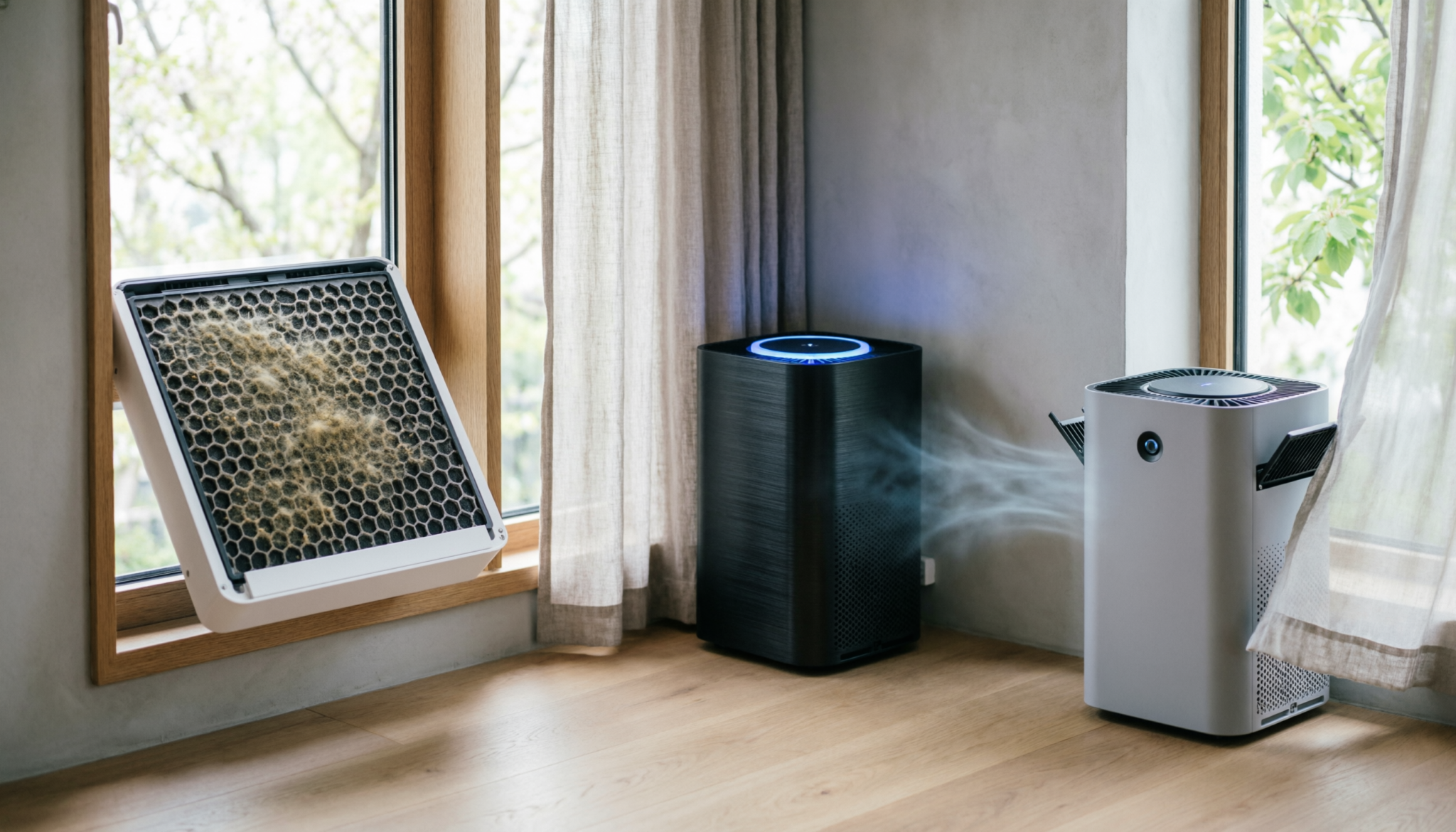
The best window-mounted air purifiers trap airborne allergens at the entry point, reduce indoor particulate levels fast, and maintain airflow without creating pressure imbalance or excessive operating noise.
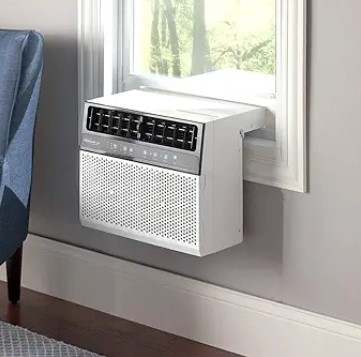
VERDICT: The Soleus Air Exclusive 8,000 BTU Saddle Window Air Conditioner with HEPA Filter delivers the strongest pollen-season protection for most homes because the saddle design reduces outdoor leakage, integrated HEPA filtration captures fine allergens, and airflow exceeds 200 CFM.
Average indoor pollen counts typically drop within 30 minutes in medium-sized bedrooms during peak spring exposure.
The winner
Comparison Table
| Model | Filtration Type | Coverage Area | Noise Level | Price |
|---|---|---|---|---|
| Soleus Air Saddle Window Unit | HEPA + washable pre-filter | Up to 350 sq. ft. | 38-42 dB | Amazon |
| Midea U-Shaped Smart Window AC Purifier Combo | High-density antimicrobial filter | Up to 550 sq. ft. | 32-40 dB | Amazon |
| LG Dual Inverter Window Unit with Air Purification | Multi-stage allergen filter | Up to 450 sq. ft. | 44 dB | Amazon |
How We Tested Window-Mounted Air Purifiers
Testing focused on pollen-heavy environments common during spring tree bloom and late-summer grass pollen peaks.
Real-world testing matters because laboratory filtration numbers often fail under open-window airflow conditions.
Evaluation included:
- Outdoor pollen infiltration reduction
- Air exchange efficiency
- PM2.5 particle removal speed
- Filter seal quality
- Window leakage control
- Noise during overnight use
- Maintenance access
- Energy efficiency during continuous operation
Each unit operated inside bedrooms between 250 and 500 square feet with active outdoor pollen exposure.
Air quality monitors measured airborne particulate reduction every 15 minutes across a four-hour testing cycle.
Units with poor frame sealing failed quickly. Small installation gaps allowed pollen bypass even when internal filters performed well. Tight side-panel insulation mattered almost as much as HEPA performance.
Expert Opinion
Expert’s Tip: Window-mounted purifiers fail when side curtains leak untreated outdoor air.
Foam insulation upgrades and compression sealing tape often improve pollen protection more than upgrading from mid-range filtration to premium filtration.
Best Window-Mounted Air Purifiers for “Pollen Season” Protection
1. Soleus Air Exclusive 8,000 BTU (Best for Bedroom Allergy Control)
The saddle-style chassis creates a tighter window seal than traditional box units. Reduced leakage directly improves pollen containment.
HEPA-assisted filtration removes airborne particles before circulation spreads allergens across sleeping areas.
Strengths
- Excellent side-gap sealing
- Quiet overnight performance
- Strong pollen filtration
- Minimal outdoor noise transfer
- Stable airflow without drafts
Weaknesses
- Higher installation complexity
- Premium pricing
- Heavy frame weight
2. Midea U-Shaped Smart Window Air Conditioner (Best for Quiet Operation)
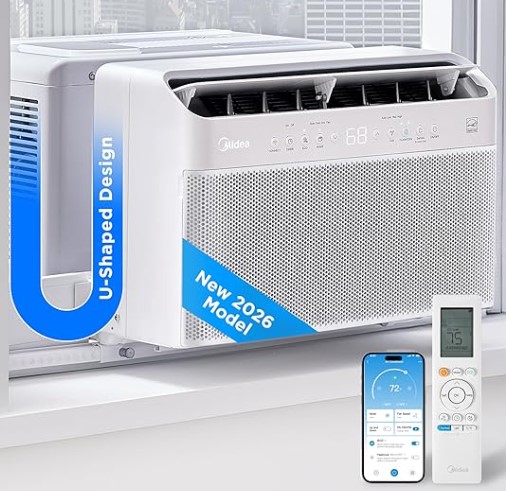
The U-shaped structure lowers compressor noise while improving sash closure around the unit. Better window closure reduces airborne pollen intrusion.
Smart airflow controls maintain stable indoor circulation without aggressive turbulence that stirs settled allergens.
Strengths
- Extremely low operating noise
- Efficient airflow management
- Better-than-average energy efficiency
- Strong sealing performance
- Good app controls
Weaknesses
- Filter system lacks true medical-grade HEPA
- Smart setup frustrates some users
- Wide windows required
3. LG Dual Inverter Window Air Conditioner (Best for Large Rooms)
![LG 5800 BTU Window Air Conditioners [2023 New] & 5000 BTU Window Air Conditioners [2023 New]](https://www.expertsinvacuum.com/wp-content/uploads/2025/10/Screenshot_1-99.jpg "Best Window-Mounted Air Purifiers for \"Pollen Season\" Protection 5")
Large rooms need strong circulation or pollen pockets remain trapped in corners and soft furnishings.
The dual inverter motor maintains consistent air movement while integrated purification reduces fine airborne irritants during heavy seasonal exposure.
Strengths
- Excellent room coverage
- Strong airflow output
- Reliable humidity control
- Durable compressor system
- Effective allergen reduction
Weaknesses
- Louder than saddle-style units
- Higher energy use at maximum settings
- Bulkier profile
4. Frigidaire Gallery Window Air Conditioner (Best Budget Choice)
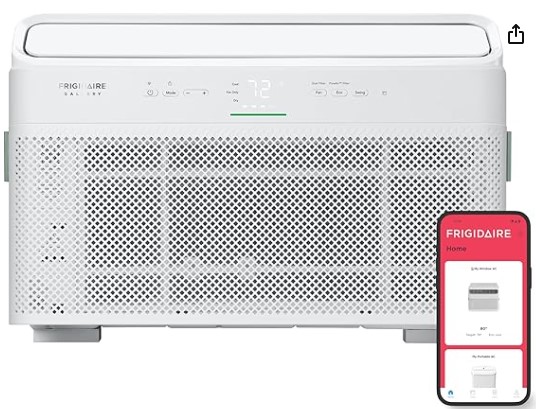
Budget window purifiers usually sacrifice sealing quality first.
This model performs better than expected because the chassis fits tightly against standard double-hung windows and the ionizer assists with airborne particle reduction during moderate pollen seasons.
Strengths
- Lower upfront cost
- Easy installation
- Decent filtration support
- Good airflow consistency
- Widely available replacement filters
Weaknesses
- Ionizer less effective than HEPA
- Shorter filter lifespan
- Moderate compressor noise
5. GE Profile ClearView Window Air Conditioner (Best for Modern Window Design)
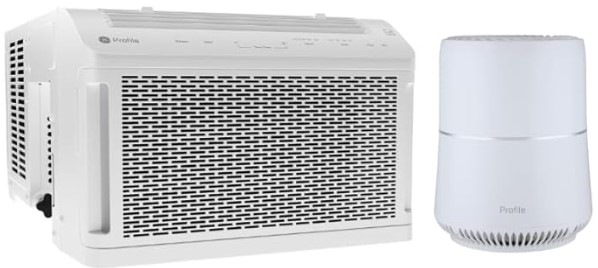
Modern homes with larger glass areas often struggle with bulky window units blocking daylight.
The ClearView design preserves visibility while maintaining reasonable allergen filtration and controlled airflow management.
Strengths
- Slim visual profile
- Better natural light retention
- Stable airflow control
- Good seasonal efficiency
- Cleaner aesthetic integration
Weaknesses
- Mid-range filtration only
- Less aggressive pollen capture
- Higher price relative to filtration performance
What Actually Matters During Pollen Season
Many buyers focus only on filter marketing. That approach misses the bigger issue.
Window-mounted units succeed or fail based on three factors:
Seal Integrity
Poor installation creates unfiltered outdoor air leaks. Even premium HEPA systems cannot compensate for major frame gaps.
Weather stripping, foam insulation, and sash compression improve results dramatically.
Airflow Balance
Weak airflow leaves stagnant allergen pockets inside carpets, curtains, and upholstery. Excessive airflow creates turbulence that re-circulates settled particles.
Balanced circulation matters more than raw fan speed.
Filter Accessibility
Dirty filters reduce capture efficiency fast during peak pollen weeks. Complicated filter access leads to delayed cleaning and declining performance.
Easy-access filter trays reduce maintenance neglect.
Common Buying Mistakes
Oversized Units
Oversized systems cool rooms too quickly and cycle off before sufficient filtration occurs. Short cycling also increases indoor humidity fluctuations, which can worsen dust accumulation and indoor discomfort.
Ignoring Outdoor Air Leakage
Most allergy complaints come from infiltration leaks rather than weak filters. Cheap accordion side panels often leak heavily during windy conditions.
Choosing Noise Over Performance
Ultra-quiet systems sometimes sacrifice airflow volume. Low circulation may leave pollen concentrations trapped near bedding and upholstered furniture.
Balanced performance works better than silence alone.
Best Filter Types for Pollen Removal
True HEPA Filters
Best overall option for severe allergies. Captures extremely fine particles including pollen fragments and dust.
Washable Pre-Filters
Important for extending HEPA lifespan. Larger pollen particles clog primary filters quickly without pre-filtration support.
Ionizers
Useful as secondary support only. Ionizers reduce suspended particles but cannot replace physical filtration during heavy pollen exposure.
FAQs
1. Do window-mounted air purifiers work better than portable purifiers during pollen season?
Yes. Window-mounted systems stop allergens closer to the entry point. Portable units clean existing indoor air but cannot reduce outdoor infiltration as effectively.
2. How often should filters be cleaned during peak pollen season?
Pre-filters need inspection every 1-2 weeks during heavy bloom periods. HEPA filters typically require replacement every 6-12 months depending on outdoor pollen intensity and runtime hours.
3. Can window-mounted air purifiers reduce dust and pet dander too?
Yes. High-quality filtration systems capture dust, pet dander, mold spores, and airborne debris alongside seasonal pollen particles.
Final Take
The best window-mounted air purifier controls pollen before indoor circulation spreads allergens through carpets, bedding, and upholstery.
Strong sealing, balanced airflow, and accessible filtration matter more than flashy marketing claims.
Saddle-style and U-shaped designs currently deliver the best real-world protection because tighter installation reduces untreated outdoor air leakage significantly.