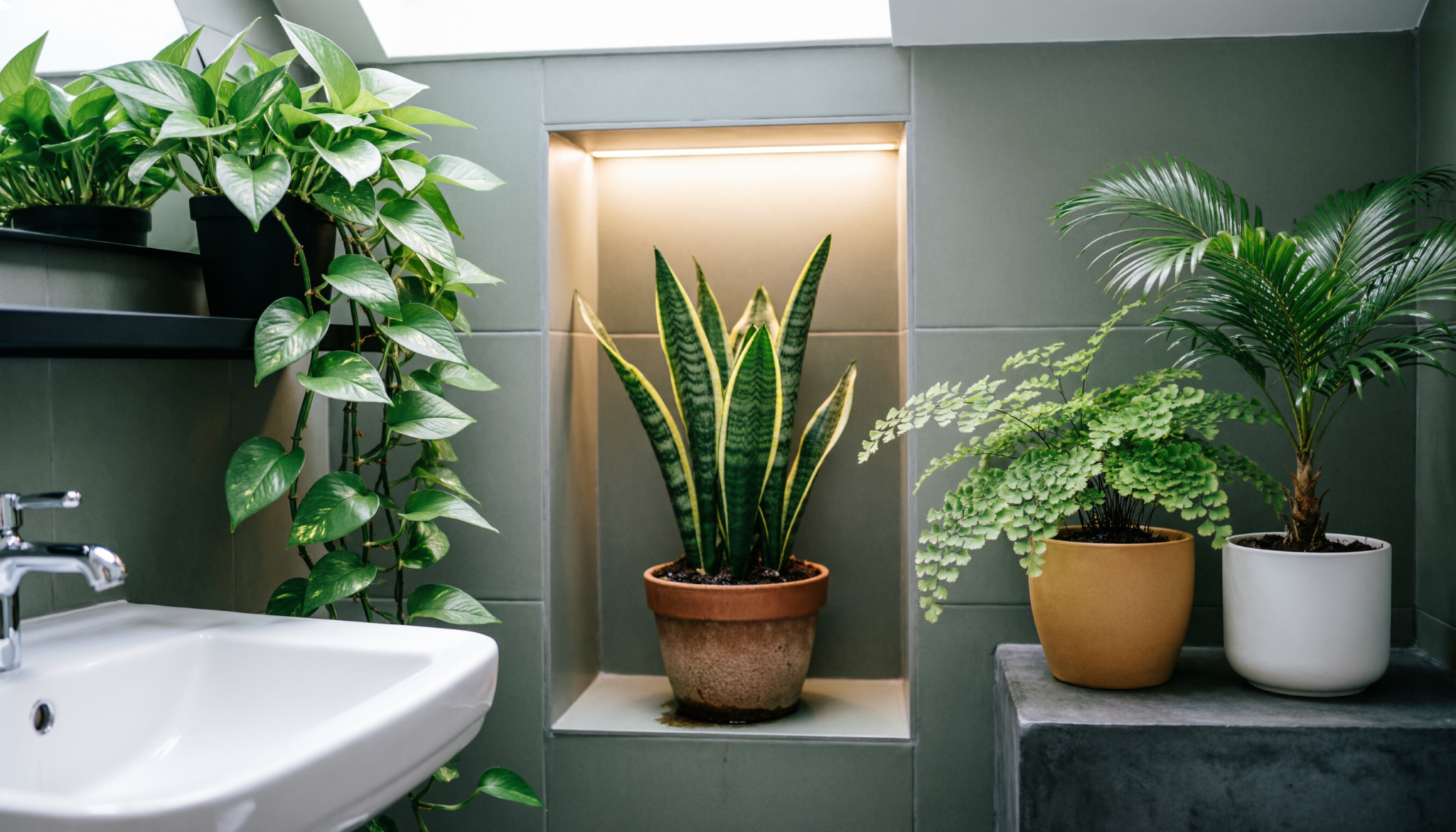
Steam, humidity, and inconsistent airflow create a difficult environment for most houseplants. Windowless bathrooms add another challenge: almost no natural light. The right species survive these conditions without constant care, yellowing leaves, or weak growth.
Aesthetic Design Protocol: Windowless bathrooms require plant species with low photosynthetic demand, high humidity tolerance, and compact root systems.
Position foliage near artificial light sources for 10 to 12 hours daily, maintain airflow to prevent fungal buildup, and avoid oversized containers that trap excess moisture around roots.
Best Low-Light Bathroom Plants
| Plant Species | Humidity Tolerance | Artificial Light Adaptability | Maintenance Level | Growth Habit |
|---|---|---|---|---|
| Snake Plant | Excellent | Excellent | Very Low | Upright, architectural |
| ZZ Plant | Excellent | Very Good | Very Low | Glossy, sculptural |
| Pothos | Excellent | Good | Low | Trailing, cascading |
| Cast Iron Plant | Excellent | Excellent | Very Low | Dense, broad foliage |
| Heartleaf Philodendron | Very Good | Good | Low | Soft trailing vines |
The Low-Light Myth: “No Light” vs. “Low Light”
“Low light” gets misunderstood all the time. Low light still means some light exists. Think hallway spillover, a cracked door, or a ceiling fixture left on for part of the day.
“No light” means exactly that. Total darkness. No plant survives that long-term.
Here’s where many setups fail:
- Bathrooms kept shut all day with lights off
- Decorative plants placed far from any light source
- Assumption that humidity replaces light
Humidity helps with leaf health, not energy production. Without light, photosynthesis stops. Even the toughest plants slowly decline.
Practical fix: ensure at least 6–8 hours of indirect or artificial light daily.
Low-Light Plants: The best species for windowless bathrooms
1. ZZ Plant (The Immortal)
Thick, waxy leaves store water and tolerate neglect better than almost anything.
Why it works:
- Handles extremely low light
- Rarely complains about missed watering
- Compact growth suits small bathrooms
Watch for:
- Overwatering, which causes root rot quickly
2. Snake Plant (The Air Purifier)
Upright, structured leaves make it ideal for tight corners and narrow shelves.
Why it works:
- Survives in very dim conditions
- Tolerates dry and humid air
- Slow growth means less maintenance
Watch for:
- Water sitting in the base of leaves
3. Pothos (The Trailer)
Trailing vines soften hard bathroom surfaces and add movement.
Why it works:
- Adapts to different light levels
- Grows even under artificial light
- Easy to propagate if stems get leggy
Watch for:
- Thin, stretched vines in very dim setups
4. Cast Iron Plant (The Indestructible)
Built for neglect, low light, and inconsistent care.
Why it works:
- Tolerates deep shade better than most
- Handles temperature swings well
- Leaves stay upright and neat
Watch for:
- Slow growth, which can test patience
5. Peace Lily (The Humidity Lover)
Adds a softer look with dark leaves and occasional white blooms.
Why it works:
- Thrives in humid air
- Shows clear signs when water is needed
- Works well near sinks or showers
Watch for:
- Drooping leaves if watering is delayed
Spatial Logic Summary: Bathrooms feel visually heavy when every surface reflects light through tile, mirrors, and porcelain. Soft foliage offsets this hardness by adding organic texture, vertical layering, and matte surfaces that visually reduce echoing glare.
Common Mistakes That Kill Bathroom Plants
Overwatering in Humid Rooms
Humidity slows soil evaporation. Many bathroom plants need less water than identical plants placed in living rooms.
Warning signs:
- Mushy stems
- Fungus gnats
- Yellow lower leaves
- Sour-smelling soil
Always allow partial drying between waterings.
Choosing Decorative Pots Without Drainage
Decorative containers trap excess moisture around roots. Standing water becomes especially dangerous in dark environments where evaporation slows dramatically.
Use:
- Nursery pots inside cachepots
- Pebble drainage trays
- Lightweight breathable soil blends
Placing Plants Too Far From Artificial Light
Even shade-tolerant species need measurable light exposure. Corners far from fixtures become dead zones for foliage health.
A plant surviving does not mean a plant thriving.
Weak growth indicators:
- Small leaves
- Long stretched stems
- Pale coloration
- Slow recovery after watering
Best Styling Approaches for Bathroom Plants
Minimal Bathrooms
Use structural plants with strong silhouettes:
- Snake plant
- ZZ plant
- Cast iron plant
Black ceramic or matte stone containers reinforce clean lines without visual clutter.
Soft Spa-Inspired Bathrooms
Use trailing foliage:
- Heartleaf philodendron
- Pothos
Natural woven baskets soften cold surfaces like marble and porcelain.
Small Bathrooms
Wall-mounted shelving prevents floor congestion.
Best compact choices:
- Mini snake plants
- Small pothos cuttings
- Compact philodendrons
Avoid oversized tropical species that overwhelm tight layouts.
Expert Opinion
Expert’s Tip: Rotate low-light bathroom plants every two weeks under brighter household lighting for 24 hours. This prevents weak, stretched growth and supports stronger leaf coloration without requiring permanent grow-light installation.
FAQs
1. Can plants survive permanently in a bathroom with no windows?
Yes, but only with consistent artificial lighting. Full-spectrum LED bulbs running 10 to 12 hours daily provide enough support for hardy low-light species.
2. Which bathroom plant requires the least maintenance?
Snake plants require the least attention. Thick leaves tolerate missed watering schedules, fluctuating humidity, and weak lighting conditions better than most indoor plants.
3. Do bathroom plants reduce mold?
Plants alone do not prevent mold. Proper ventilation, exhaust fan usage, and airflow remain the primary defenses against fungal buildup in humid bathrooms.
Final Take
Windowless bathrooms require resilient plants rather than delicate statement foliage.
Snake plants, ZZ plants, pothos, cast iron plants, and heartleaf philodendrons handle humidity, weak lighting, and temperature swings reliably.
Consistent artificial light, controlled watering, and breathable containers matter more than expensive décor styling or fertilizer routines.