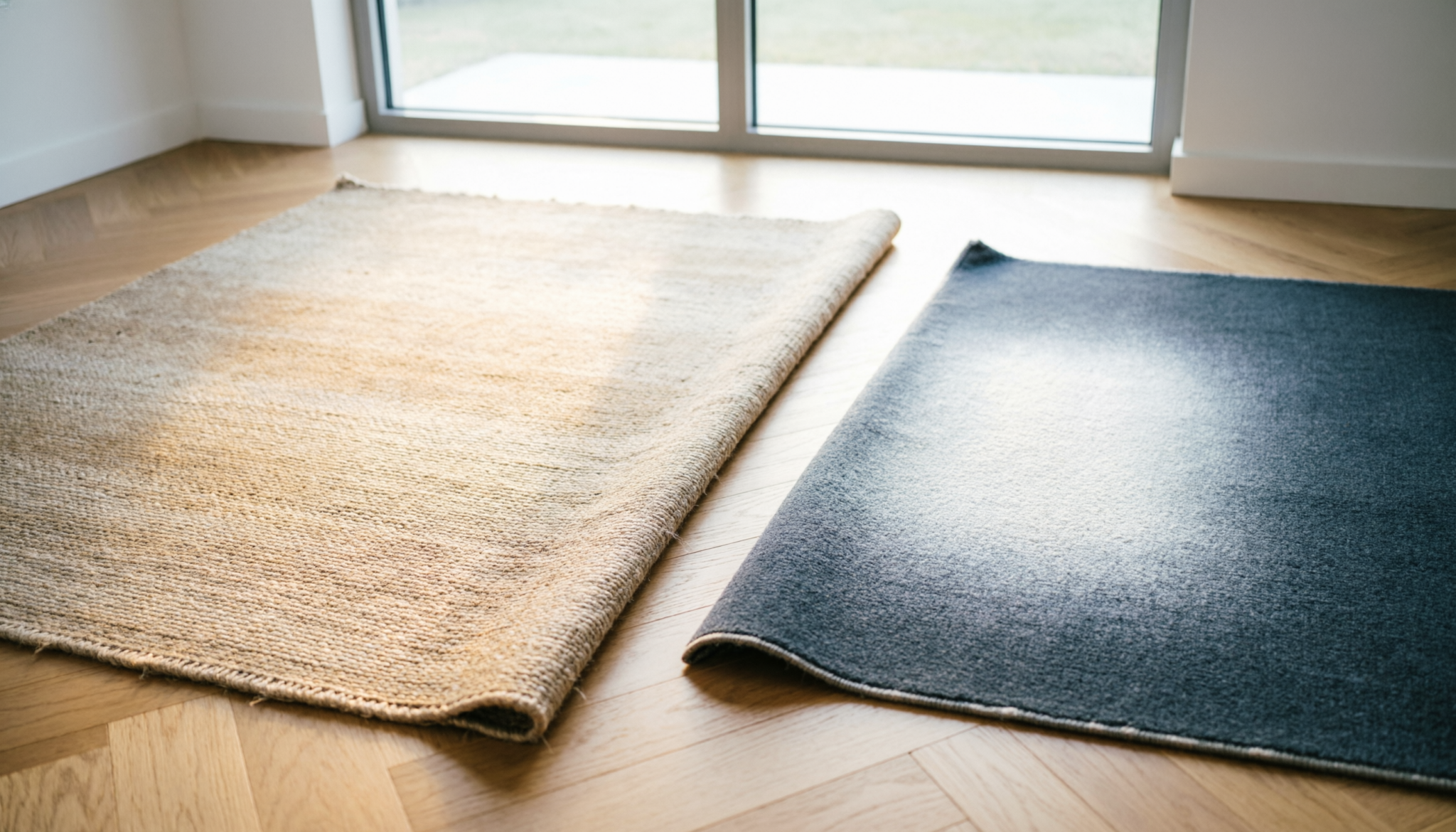
Direct sunlight changes rugs faster than most homeowners expect. Fading, brittleness, fiber breakdown, and uneven wear often appear long before visible stains or frayed edges.
Fiber composition matters more than color alone. Wool, jute, polypropylene, nylon, and polyester all react differently to UV exposure, heat, and fluctuating indoor humidity.
Preservation Brief
Natural fiber rugs require UV moderation, stable humidity between 40% and 50%, and quarterly rotation to reduce solar fading.
Synthetic rugs resist bleaching longer but often develop heat-related stiffness and texture distortion near windows.
South-facing rooms require UV-filtering window treatments and an 18-inch setback from direct glass exposure to extend rug lifespan.
Comparison Table
| Fiber Type | UV Fade Resistance | Texture Retention | Heat Tolerance |
|---|---|---|---|
| Wool | Moderate | Excellent | Excellent |
| Jute | Poor | Poor | Moderate |
| Polypropylene | Excellent | Moderate | Moderate |
| Nylon | Good | Excellent | Good |
| Polyester | Moderate | Good | Moderate |
The Chemistry of Fading
Sunlight carries ultraviolet (UV) radiation, which breaks molecular bonds inside fibers and dyes. This is not just surface damage. It reaches into the structure of the material.
Natural fibers such as wool, jute, and silk rely on organic compounds. UV rays attack these compounds, causing:
- Color fading (sun-bleaching)
- Loss of strength
- Dryness and brittleness
Synthetic fibers are engineered differently. Many resist UV damage because their chemical structure is more stable.
Some even include built-in UV inhibitors that slow degradation.
That difference shows up fast in real homes. A jute rug in a bright sunroom can look worn within a year.
A polypropylene rug in the same spot can hold steady for several years with minimal fading.
Why Direct Sunlight Damages Rugs Faster Than Foot Traffic
Ultraviolet radiation weakens rug fibers at the molecular level. Foot traffic compresses pile and causes abrasion, but sunlight permanently alters color pigments and structural integrity.
Natural fibers absorb UV differently from synthetic materials. Wool contains natural proteins that eventually weaken under prolonged exposure.
Cotton fades quickly because cellulose fibers break down when exposed to strong sunlight daily. Jute and sisal dry out, becoming brittle and rough.
Synthetic fibers resist fading longer because manufacturers often add UV stabilizers during production.
Polypropylene performs especially well near sliding doors and large windows. Nylon retains elasticity and pile definition even after years of sunlight exposure.
Heat buildup creates another issue. Rugs placed beneath intense afternoon sun trap thermal energy.
This dries backing adhesives, curls edges, and stiffens low-quality synthetic piles. Dark-colored rugs absorb even more heat, accelerating wear.
Room orientation also matters:
- South-facing rooms receive the harshest sunlight throughout the day
- West-facing windows create intense afternoon heat
- Skylights expose rugs to concentrated vertical UV rays
- Coastal homes experience stronger reflective UV exposure
Even premium rugs deteriorate prematurely without sun management.
Natural Fiber Rugs: Beauty With Higher Maintenance Demands
Natural fiber rugs create warmth, texture, and visual depth that synthetic materials rarely replicate convincingly. Wool, sisal, cotton, and jute add softness and tonal variation that suit traditional, organic, and layered interiors.
Durability varies sharply between fiber categories.
Wool Rugs
Wool remains the strongest natural option for sunlit rooms. Dense wool fibers contain lanolin, which helps resist dirt and moderate drying.
High-quality wool rugs maintain texture for decades with proper rotation and UV protection.
However, strong direct sunlight still causes:
- Gradual fading
- Yellowing in lighter shades
- Fiber weakening near windows
- Uneven color exposure
Hand-knotted wool rugs often fade gracefully rather than patchily. Many homeowners value this softened aged appearance.
Jute and Sisal Rugs
Jute performs poorly in sunny spaces. Constant heat exposure dries fibers rapidly, causing splitting and brittleness. High-traffic pathways then begin shedding aggressively.
Sisal handles sunlight slightly better but still develops rough texture changes over time. Fiber edges can splinter in rooms with intense heat and low humidity.
Natural fiber rugs also absorb moisture fluctuations more aggressively than synthetics. Dry climates accelerate cracking and shrinkage.
Synthetic Rugs: Longer Lifespan With Better UV Resistance
Synthetic rugs dominate high-sun rooms for one reason: consistency. Polypropylene, nylon, and polyester tolerate prolonged UV exposure with fewer visible changes.
Modern manufacturing has improved synthetic rug texture significantly. Many high-end options now mimic wool pile convincingly while outperforming natural fibers in sun resistance.
Polypropylene Rugs
Polypropylene handles sunlight better than nearly every affordable rug material. Solution-dyed fibers lock color throughout the material instead of coating the surface alone.
Benefits include:
- Strong fade resistance
- Lower moisture absorption
- Better stain resistance
- Minimal shedding
- Stable shape retention
Weaknesses still exist. Cheap polypropylene rugs flatten permanently under furniture and may feel stiff compared to wool.
Nylon Rugs
Nylon offers the best balance between resilience and softness. Dense nylon pile rebounds well after compression and tolerates heat more effectively than polyester.
Commercial interiors frequently use nylon because it withstands:
- Heavy traffic
- UV exposure
- Frequent cleaning
- Furniture pressure
Higher-quality nylon rugs can last more than a decade in bright rooms when paired with rug rotation and window protection.
Polyester Rugs
Polyester resists staining effectively but struggles with prolonged heat exposure. Fibers may mat or develop shiny flattened sections in sunny areas.
Low-cost polyester rugs also fade unevenly after years of direct exposure.
Rug Pads Matter More Than Most Homeowners Realize
Sunlight damages more than visible fibers. Rug pads deteriorate underneath heat accumulation, especially near glass doors and large windows.
Cheap PVC pads harden and bond to flooring surfaces over time. Heat accelerates this process dramatically.
| Pad Material | Grip Outcome | Floor Safety | Longevity |
|---|---|---|---|
| PVC Foam | Strong Initial Grip | Poor on Hardwood | Low |
| Felt | Moderate Grip | Excellent | Moderate |
| Felt and Natural Rubber | Excellent Grip | Excellent | High |
| Synthetic Rubber Mesh | Moderate Grip | Good | Moderate |
Felt-and-rubber combinations perform best beneath rugs exposed to sunlight because natural rubber tolerates thermal fluctuations better than low-cost vinyl compounds.
Proper pads also improve airflow beneath rugs, reducing trapped heat buildup.
How to Extend Rug Life in Bright Rooms
Sunlight damage cannot be eliminated entirely, but several practical adjustments dramatically slow deterioration.
Rotate Rugs Every Three Months
Quarterly rotation distributes fading evenly. Large window walls create obvious sun lines without regular movement.
Install UV-Filtering Window Treatments
Solar shades reduce UV penetration while preserving natural light. Basic sheer curtains help slightly, but dedicated UV-filtering fabrics perform substantially better.
Maintain Stable Indoor Humidity
Dry indoor air weakens natural fibers faster. Maintain humidity between 40% and 50% to reduce brittleness.
Avoid Placing Rugs Directly Against Glass
Leave at least 18 inches between rugs and large sun-facing windows whenever possible. This reduces concentrated heat exposure.
Use Lighter Colors Strategically
Medium-tone patterns hide gradual fading better than solid dark rugs or bright saturated colors.
Expert Opinion
Expert’s Tip: Direct sunlight weakens latex rug backings long before visible fading appears. Use a dense felt-and-natural-rubber pad beneath wool or synthetic rugs to reduce trapped heat and stabilize airflow.
Quarterly rug rotation remains mandatory in south-facing rooms. Cheap vinyl pads harden under UV exposure and permanently mark hardwood flooring.
Which Rug Fiber Performs Best in Sunny Rooms?
Performance depends on priorities.
Choose wool for:
- Luxury texture
- Long-term elegance
- Better insulation
- Rich tonal variation
Choose polypropylene for:
- Strong UV resistance
- Budget-friendly durability
- Family rooms
- Sliding-door areas
Choose nylon for:
- Balanced performance
- Heavy traffic
- Better softness
- Long lifespan
Avoid jute in rooms with intense direct sunlight unless decorative lifespan matters more than durability.
No rug remains untouched by UV exposure forever. The goal involves slowing visible deterioration while maintaining structural integrity.
Final Verdict: Natural or Synthetic?
Synthetic rugs generally last longer in direct sunlight. Polypropylene and nylon outperform most natural fibers in fade resistance, shape retention, and long-term durability.
Natural rugs still offer superior texture and visual richness, especially wool. However, they require stricter maintenance, careful placement, and stronger UV protection.
For heavily sunlit living rooms, synthetic fibers provide better long-term value. For lower-light interiors where texture matters most, wool remains the strongest natural option.
FAQs
1. Which rug fiber fades the least in direct sunlight?
Polypropylene fades the least because solution-dyed fibers hold pigment throughout the material. Nylon also performs well. Cotton and jute fade significantly faster under continuous UV exposure.
2. Do darker rugs fade faster than lighter rugs?
Yes. Dark colors absorb more heat and show fading more visibly. Deep blue, black, and red rugs often develop uneven discoloration near windows sooner than medium-tone patterned rugs.
3. How often should rugs be rotated in sunny rooms?
Rotate rugs every three months in rooms with direct sunlight. Strong south-facing exposure may require rotation every six to eight weeks to prevent uneven fading patterns.
Final Take
Direct sunlight acts like slow structural erosion for rugs. Fiber composition determines whether fading appears gradually or whether cracking, stiffness, and texture loss arrive early.
Wool offers the strongest natural durability. Polypropylene leads among synthetics. Proper rug rotation, UV filtering, stable humidity, and quality rug pads matter as much as the rug itself.