
A well-made faux olive tree adds height, softness, and quiet elegance without the upkeep of a real plant.
The key is realism such as natural trunk texture, varied leaf tones, and a balanced shape.
The options below hold up in bright rooms and still look convincing up close.
The Verdict: The Nearly Natural Olive Tree
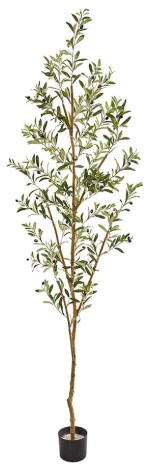
The best realistic faux olive trees use multi-tone silk or PE leaves, irregular wood trunks, and weighted bases for stability.
Our top pick, the Nearly Natural 82-inch Olive Tree, stands out for its lifelike branching and full canopy, making it a reliable anchor piece for living rooms and entryways.
Comparison Table
| Feature | The High-End Choice | The Best Value | The Design Leader |
|---|---|---|---|
| Model | Nearly Natural 82” Olive Tree | Silk Tree Warehouse 6ft Olive Tree | VIVATREES 7ft Olive Tree |
| Height | 82 Inches | 72 Inches | 84 Inches |
| Leaf Material | Premium Silk Blend | Silk | PE + Silk Mix |
| Trunk | Natural Wood | Wood Finish | Real Wood |
| Base | Weighted Pot | Basic Pot | Decorative Planter |
| Best For | Living Rooms / Entryways | Budget Styling | Statement Corners |
| Price | Amazon | Amazon | Amazon |
Why Faux Olive Trees Work in Homes
Real olive trees struggle indoors. Light levels, airflow, and watering cycles rarely match what they need. Faux versions solve that problem without sacrificing style.
The difference shows in daily life. No leaf drop, no leaning toward windows, no guessing about soil dryness.
A good faux olive tree holds its shape, fills vertical space, and softens hard corners all year. The trick is choosing one that doesn’t look plastic under daylight.
Best Realistic Faux Olive Trees for an Upscale Interior
1. Best Overall: Nearly Natural 82in Olive Artificial Tree
This one gets the balance right. The branching isn’t symmetrical, which is exactly what makes it believable.
Leaves carry slight color variation, avoiding that flat green tone that gives cheaper trees away.
The height works well beside sofas or console tables. A heavier base keeps it steady, even in high-traffic areas.
Swapping the nursery pot for a ceramic planter instantly elevates the look.
2. Best Value: Silk Tree Warehouse 6ft Artificial Olive Tree
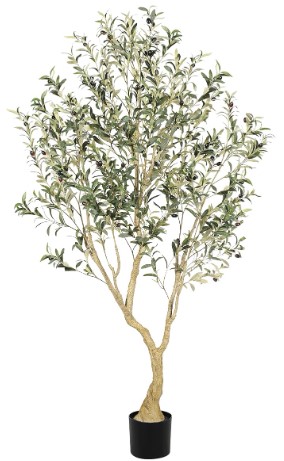
Lower cost usually means obvious shortcuts, but this one holds up surprisingly well.
The leaf density is slightly lighter, which actually helps mimic a real olive tree’s airy structure.
The trunk isn’t as detailed as premium options, but placement fixes that.
Tuck it into a woven basket or textured planter, and the overall effect feels intentional rather than budget.
3. Best Design Statement: VIVATREES 7ft Artificial Olive Tree
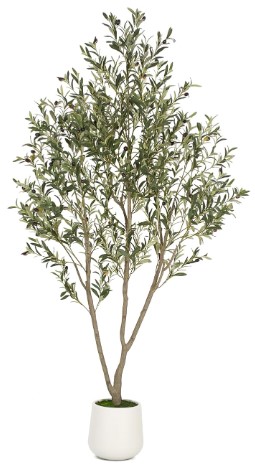
Taller and fuller, this option fills empty corners that feel awkward with smaller decor. The trunk uses real wood, which immediately improves realism at eye level.
The included planter saves an extra step.
Styling works best in spaces with clean lines where the tree becomes the main vertical feature without competing elements.
4. Best Compact Option: Nearly Natural Olive Artificial Tree
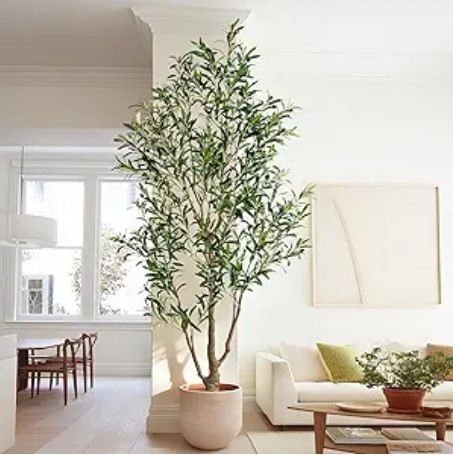
Not every room needs a tall tree. This size fits apartments, bedrooms, or tight entryways without crowding the space.
The proportions stay natural, with enough branching to avoid looking sparse.
It pairs well with sideboards or window corners where a taller piece would overwhelm the room.
5. Best for Layered Styling: Pure Garden Artificial Olive Tree 5ft
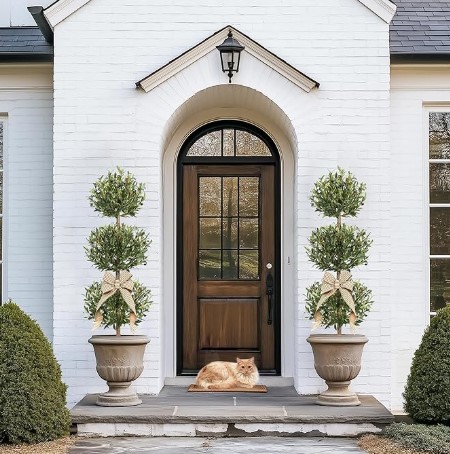
Shorter height makes this one ideal for layering with other decor—think next to a chair, under artwork, or grouped with baskets.
The realism isn’t the strongest up close, but that’s not where it shines.
Step back a few feet, and it blends nicely into a styled corner without drawing too much attention.
FAQs
1. How can a faux olive tree look more realistic?
Placement and styling matter more than the tree itself. Use a solid planter such as ceramic, clay, or woven.
Add moss or soil cover at the base. Slightly bend branches to break uniformity. Perfect symmetry is what makes artificial plants obvious.
2. Where should a faux olive tree be placed?
Corners near natural light work best, even though light isn’t required. Next to sofas, entry consoles, or empty wall sections helps balance the room.
Avoid placing it dead center unless the space is large enough to support it.
3. How tall should a faux olive tree be?
For standard ceilings, 6 to 7 feet feels proportionate. Smaller rooms benefit from 5-foot versions.
Oversized trees in tight spaces tend to look forced rather than refined.
Final Thought
A faux olive tree earns its place by doing one job well, adding height and calm without extra work.
Focus on natural shapes, varied leaves, and a solid base.
Skip anything too perfect. The right piece blends in quietly, yet makes the whole room feel finished.