
VERDICT: For polymerized grease, the McCulloch A1230-009 scraper delivers strong removal, while brass brushes provide superior abrasion for carbonized residue on durable metal.
Dupray’s Neat brass brush pairs 275°F steam with controlled scrubbing. For hardened oven, grill, and stovetop deposits, a rigid scraper plus brass brush offers the strongest two-stage cleaning.
The Winner
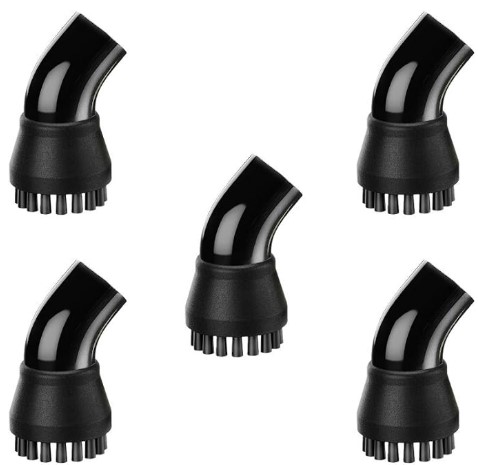
Comparison Table
| Model | Scraper Action | Abrasive Action | Best Compatibility | Price |
|---|---|---|---|---|
| McCulloch A1230-005 Scraper | Excellent | None | Ovens, stovetops, baked-on food | Amazon |
| McCulloch A1230-006 | Good with steam | Excellent | Durable metal, grout, equipment | Amazon |
| Dupray Small Brass Brushes, 10-Pack | Good with steam lance | Excellent | Neat, Neat Plus, detail cleaning | Amazon |
Testing Criteria: Performance on Polymerized Grease
A useful attachment must remove residue rather than merely redistribute softened grease. Five criteria separate effective tools from decorative accessories.
1. Mechanical separation
Polymerized grease requires physical disruption after thermal softening. A scraper blade supplies concentrated edge pressure. Brass bristles supply distributed abrasion.
2. Heat compatibility
Steam cleaners can produce substantial temperatures. The Dupray Neat reaches up to 275°F and produces approximately 50 PSI, while the 1.6-liter tank supports extended cleaning sessions.
3. Surface safety
Brass and stainless-steel brushes can scratch softer finishes. Manufacturer guidance specifically limits brass brushes to durable, scratch-resistant surfaces and recommends inconspicuous spot testing.
4. Attachment security
A scraper that shifts under pressure wastes steam and increases the chance of accidental surface damage. Tight mechanical coupling matters more during hardened-grease removal than during light dust removal.
5. Cleaning geometry
Flat scraper edges perform best on broad, accessible deposits. Small brass brushes perform better around burner rings, rack joints, seams, grooves, and textured metal.
The Critical Distinction: Softened Grease Versus Removed Grease
Steam does not magically erase polymerized grease. Heat reduces viscosity and weakens adhesion. Mechanical action then separates the softened film from the substrate.
For thick deposits, a practical sequence starts with short steam exposure, followed by scraping while the residue remains warm.
A microfiber wipe removes loosened material. A brass brush handles the remaining thin carbonized film on compatible metal.
Repeated dry scraping without thermal softening increases surface damage risk. Excessive steam exposure can also spread liquefied grease across adjacent surfaces.
Expert Opinion
Expert’s Tip: Treat polymerized grease as a two-stage removal problem. Use steam to reduce adhesion, then apply a scraper or brass brush according to surface hardness.
Never use aggressive brass or stainless-steel bristles on nonstick coatings, soft aluminum, painted surfaces, polished finishes, or delicate enamel without manufacturer approval.
Best Steam Scraper Attachments for Polymerized Grease
1. McCulloch A1230-005 Scraper (Best for Thick Baked-On Grease)
McCulloch manufactures the A1230-005 as a dedicated 3-inch scraper for baked-on food, grease, grime, and hard-to-remove material.
Manufacturer compatibility covers several McCulloch steam cleaners, including MC1375 and MC1385.
The broad blade provides the strongest mechanical advantage among the reviewed attachment types.
A rigid edge concentrates force across a narrow contact line, allowing softened grease to lift from flat oven and stovetop surfaces.
Pros
- Dedicated 3-inch scraping edge
- Extremely low manufacturer price
- Broad McCulloch model compatibility
Cons
- No abrasive bristles for residue trapped inside grooves
Best application: Oven floors, stovetop surfaces, metal drip areas, and thick baked-on deposits.
2. McCulloch A1230-006 (Best for Carbonized Metal Residue)
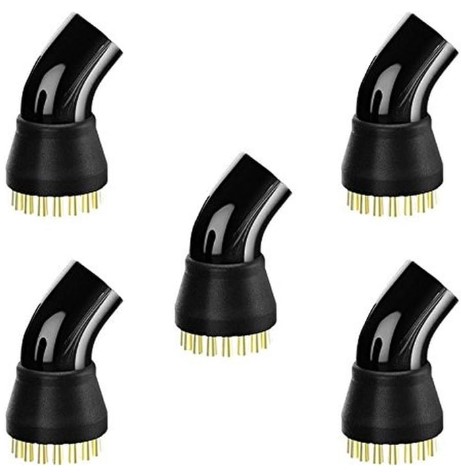
The McCulloch brass brush provides the abrasion required after steam softens a polymerized film.
Brass bristles create substantially more mechanical action than nylon while remaining less aggressive than many steel brushes.
Manufacturer guidance limits the brush to durable surfaces resistant to scratching.
Pros
- Five-brush replacement pack
- Strong abrasion for durable metal
- Useful around grooves and textured surfaces
Cons
- Scratching risk on soft or coated materials
Best application: Oven racks, durable metal grates, heavy-duty equipment, and other scratch-resistant surfaces.
3. Dupray Small Brass Brushes (Best for Dupray Neat Detail Work)
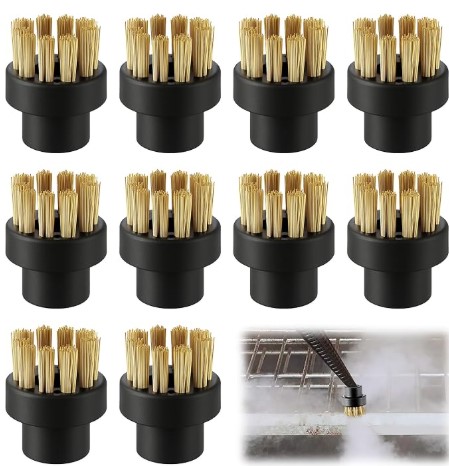
Dupray supplies small brass brushes specifically within the broader accessory ecosystem.
The small diameter provides better access than a broad scraper around burner assemblies, seams, corners, and narrow metal channels.
The Dupray Neat includes one brass brush and five nylon brushes, with the steam lance designed for precision cleaning and small-brush attachment.
Pros
- Excellent access around tight components
- Ten-piece replacement quantity
- Compatible with the Neat accessory system
Cons
- Higher replacement cost than the McCulloch five-pack
Best application: Detailed grease removal around stove hardware, durable metal fittings, and narrow grooves.
How to Remove Polymerized Grease With a Steam Scraper
Start with loose debris removal. Large crumbs and carbon flakes should leave the surface before steam application.
Apply concentrated steam to a small section rather than flooding an entire appliance. Short dwell periods reduce grease migration and allow controlled observation of surface response.
Use the scraper at a shallow angle. Excessive downward force provides little benefit after adhesion has weakened and increases scratching risk.
Follow scraping with a microfiber wipe. Remaining thin residue can receive a brass-brush pass when the substrate consists of durable, scratch-resistant metal.
Repeat the steam-and-mechanical cycle rather than increasing pressure aggressively. Polymerized deposits often contain multiple layers created by repeated cooking cycles.
Layer-by-layer removal produces better control than one prolonged aggressive pass.
Surface Compatibility Matters More Than Scraper Strength
Nonstick coatings deserve special caution. High heat and mechanical abrasion can damage coating integrity.
Soft aluminum also requires caution because brass bristles and rigid scraper edges can leave visible marks.
Painted surfaces, polished finishes, decorative coatings, and delicate enamel require manufacturer-approved methods.
Durable stainless steel, cast iron, and appropriate oven-rack surfaces generally provide a better match for aggressive attachments.
Steam cleaning also requires thermal caution. Steam can cause burns, and steam-cleaner manufacturers advise adult operation and appropriate caution around powerful heated equipment.
FAQ
1. What attachment works best for thick polymerized grease?
A rigid scraper provides the strongest first-stage mechanical removal. A brass brush provides better secondary abrasion for thin carbonized residue on durable metal.
The strongest overall combination uses steam for thermal softening followed by controlled scraping and selective brass-brush work.
2. Can a brass steam brush remove polymerized grease?
Yes, brass bristles can remove stubborn residue from durable, scratch-resistant surfaces. Brass performs especially well after steam softens the grease layer.
Brass should not contact delicate coatings, soft metals, or surfaces susceptible to scratching without manufacturer approval and spot testing. McCulloch specifically recommends brass brushes for durable surfaces.
3. Does higher steam temperature eliminate the need for scraping?
No. Higher temperature improves softening but does not eliminate mechanical removal. The Dupray Neat reaches 275°F, yet scraper or brush action remains valuable for hardened deposits.
Polymerized grease represents a bonded residue problem, not simply a temperature problem.
Final Word
Polymerized grease requires heat, dwell time, and mechanical separation. A rigid scraper removes softened films; brass bristles attack residual carbon on durable metal.
The McCulloch scraper earns the strongest overall attachment rating, while Dupray’s brass brush system suits Neat owners. Surface compatibility remains mandatory because steam cannot reverse material damage.