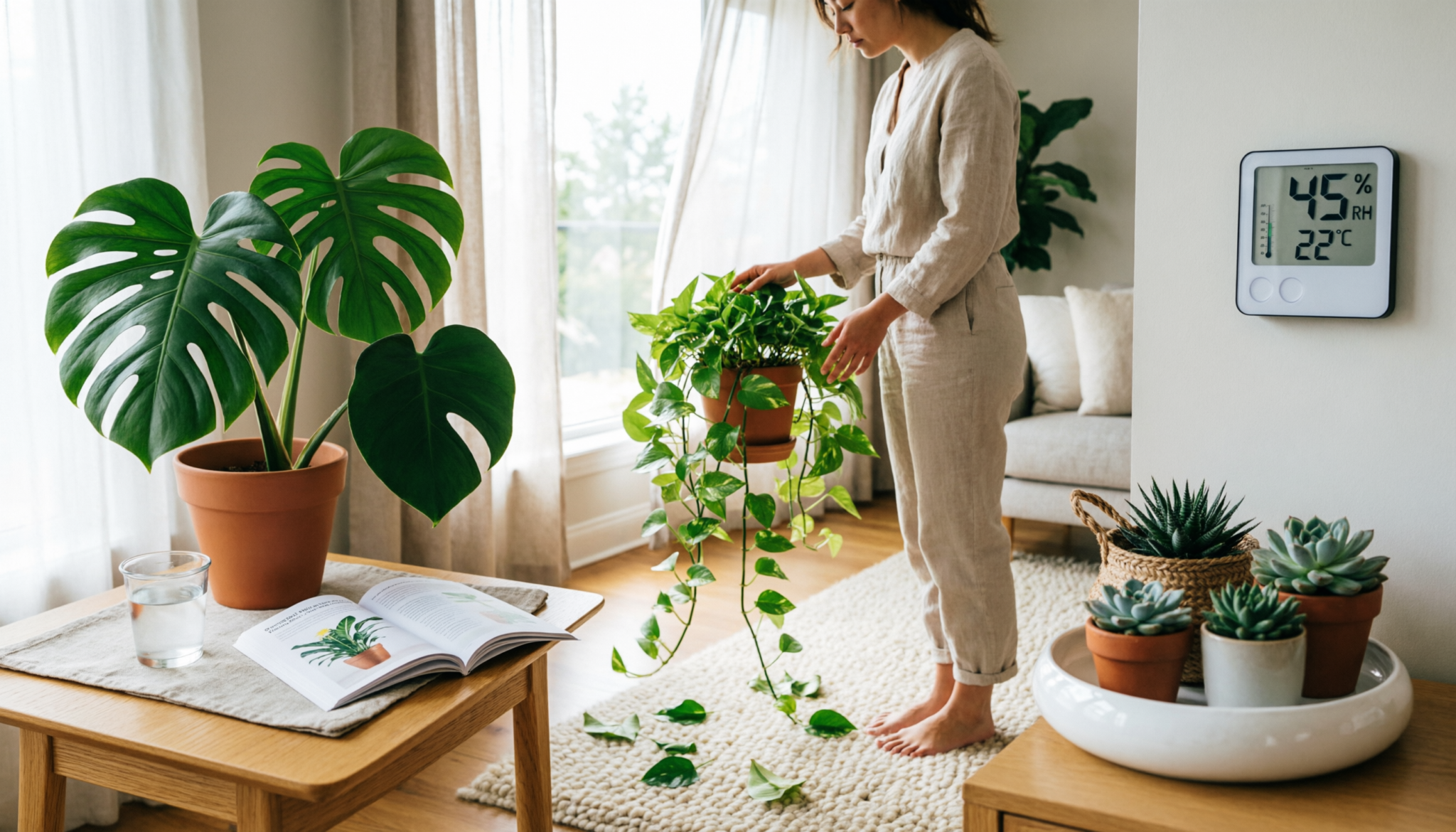
Indoor plants bring calm, softness, and life into a home, but many claims about their health benefits stretch the truth. Some are backed by science, others are simply repeated online.
Clear understanding helps in choosing plants for real value such as comfort, mood support, and subtle environmental benefits that genuinely improve everyday living.
The Short Answer
While the famous 1989 NASA study proved plants can remove VOCs like formaldehyde, the fiction is that two or three plants will purify indoor air.
In reality, hundreds would be needed to match normal ventilation. The real benefit lies in stress reduction, slight humidity improvement, and a more calming indoor atmosphere.
The Fact vs. Fiction Table
| Claim | Status | The Scientific Reality |
|---|---|---|
| Removes Toxins | ⚠️ Partial | Works in labs, but home impact is negligible. |
| Boosts Oxygen | ✅ Fact | Occurs during photosynthesis (daytime only). |
| Reduces Stress | ✅ Fact | Proven to lower blood pressure and anxiety. |
| Purifies Smoke | ❌ Fiction | Particles are too large for plants to absorb. |
The NASA Study Explained: What it actually measured
The NASA Clean Air Study tested plants in sealed chambers, not real homes. In that controlled setup, plants removed small amounts of toxins like benzene and formaldehyde.
Here’s the problem. Homes are not sealed boxes. Air constantly moves through doors, windows, and ventilation systems. That airflow already replaces indoor air faster than plants can clean it.
The takeaway: plants can absorb pollutants, but the effect in a normal home is minimal. Expecting a few pots to act like an air purifier is unrealistic.
Psychological Benefits: Why ‘Visual Greenery’ lowers Cortisol
This is where indoor plants truly earn their place.
Studies show that greenery lowers cortisol, the body’s main stress hormone. Even a small cluster of plants on a shelf or near a window can create a sense of calm and focus.
In practical terms:
- Rooms feel less harsh and more balanced
- Workspaces become easier to sit in for long periods
- Visual fatigue reduces, especially in screen-heavy routines
The effect is subtle but consistent. A room with plants simply feels better to live in.
Humidity and Skin Health: The underrated benefit of transpiration
Plants release moisture into the air through a process called Transpiration. It’s not dramatic, but it matters in dry indoor conditions.
Over time, this added moisture can:
- Reduce dry skin and irritated sinuses
- Help wooden furniture resist cracking
- Make air feel less stale
A few well-watered plants won’t replace a humidifier, but they can soften the dryness in a noticeable way, especially in smaller rooms.
Practical Plant Picks That Hold Up in Homes
These choices are reliable, low-fuss, and widely appreciated by long-term owners:
- Snake Plant (Sansevieria)
Tolerates neglect, low light, and irregular watering. Ideal for bedrooms and corners. - Pothos (Devil’s Ivy)
Fast-growing and forgiving. Works well on shelves or hanging baskets. - Peace Lily
Adds softness with blooms and helps slightly with humidity. Needs consistent watering. - Areca Palm
Good for bright rooms. Adds noticeable moisture compared to smaller plants. - ZZ Plant
Handles low light and missed watering without complaint. Excellent for busy homes.
The common thread: resilience. Plants that survive real routines that are not perfect care are the ones worth keeping.
FAQs
1. How many plants are needed to clean indoor air?
Hundreds would be required to match normal ventilation. Plants alone cannot replace airflow or filtration systems.
2. Are some plants better for health than others?
Differences in air-cleaning ability are minor in real homes. Hardiness and ease of care matter more for long-term benefit.
3. Can indoor plants improve sleep quality?
Indirectly, yes. A calmer, more comfortable space can support better rest, but plants are not a direct sleep aid.
Final Thought
Indoor plants are not air purifiers, and expecting them to act like one leads to disappointment. Their real value is quieter but meaningful: calmer spaces, softer air, and a sense of life indoors.
Choose hardy varieties, place them where they can be seen daily, and enjoy steady, reliable benefits that hold up over time.