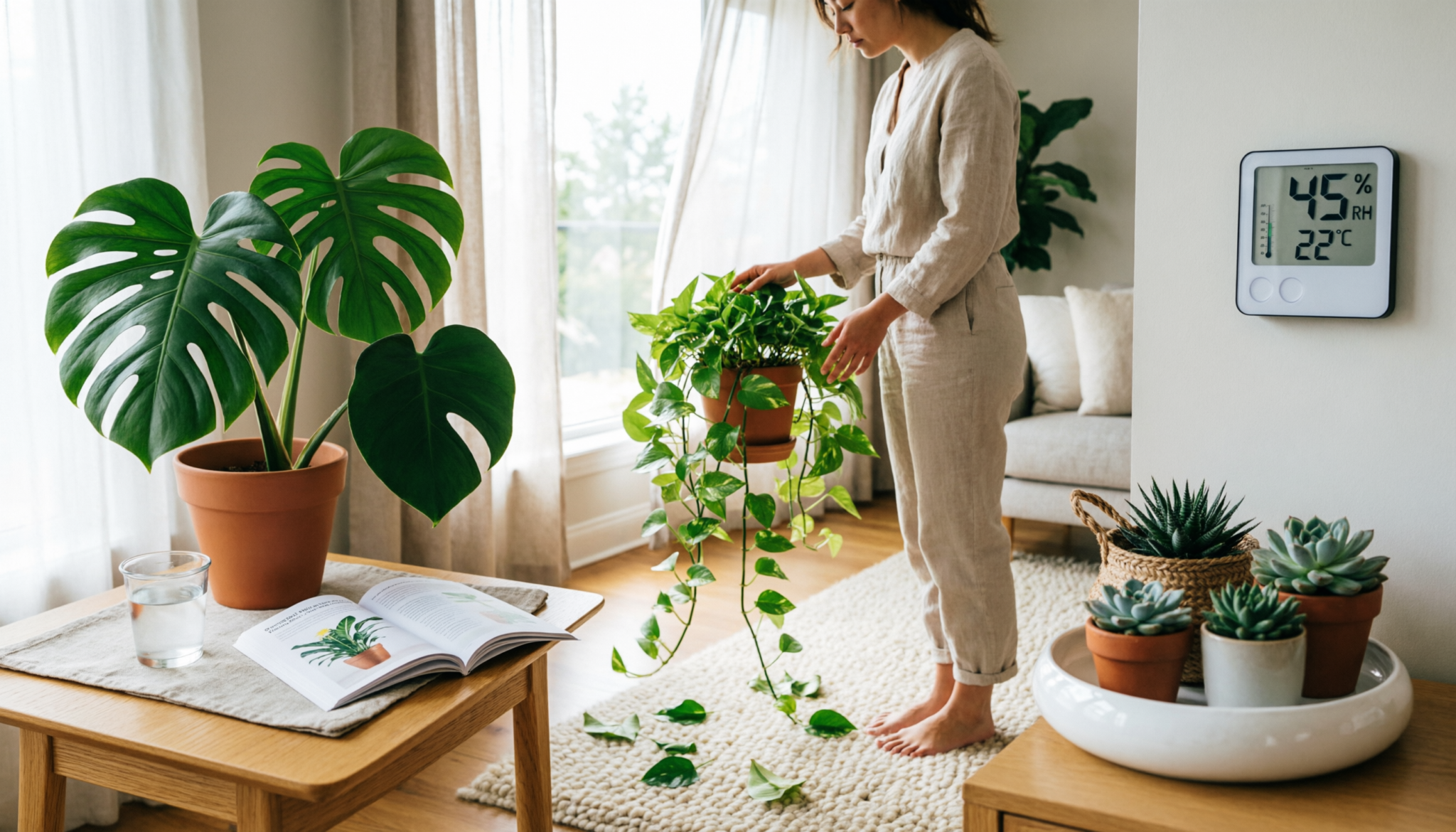
Indoor plants carry a reputation for cleaner air, lower stress, sharper focus, and healthier homes. Some claims hold up under research. Others come from marketing hype and misread studies.
The real value of houseplants sits somewhere between science and lifestyle: measurable psychological benefits, modest air-quality support, and stronger indoor comfort when plant care stays realistic.
Health Reality Brief: Indoor plants support mental well-being through stress reduction, visual softness, and humidity balance.
Air purification benefits exist but remain limited in standard homes without heavy plant density and ventilation control. Overwatered soil, mold growth, and poor drainage create greater health risks than most plants solve.
Comparison Table
| Claim | Scientific Support | Practical Outcome | Risk Level | Long-Term Impact |
|---|---|---|---|---|
| Air purification | Moderate in controlled lab studies | Minor improvement in typical homes | Low | Best when paired with ventilation |
| Stress reduction | Strong | Noticeable mood support | Very low | Consistent positive effect |
| Humidity balance | Moderate | Reduced dry-air discomfort | Low | Helpful during dry seasons |
| Allergy reduction | Weak | Depends on plant type and care | Medium | Poor maintenance increases allergens |
| Productivity boost | Moderate | Better visual comfort and focus | Very low | Effective in workspaces |
Why Indoor Plants Improve Mental Comfort
The strongest evidence behind indoor plants connects to mental wellness rather than dramatic physical health changes. Greenery softens harsh interiors, reduces visual fatigue, and creates a calmer sensory environment.
Workspaces with natural elements often report lower stress perception and stronger concentration.
Hospitals, offices, and classrooms repeatedly use biophilic design principles because greenery changes how indoor environments feel psychologically.
Several factors contribute to this effect:
- Organic shapes reduce visual harshness
- Green tones lower sensory tension
- Plant care routines create structure
- Natural textures reduce sterile room fatigue
- Living decor improves emotional attachment to spaces
A single healthy plant near a reading chair or desk often creates more emotional comfort than overcrowding an entire room with difficult species.
Plant placement matters more than quantity. Balanced spacing prevents visual clutter and improves airflow around leaves and soil surfaces.
The Truth About Air Purification Claims
Air-cleaning claims surrounding houseplants often stretch far beyond the actual science.
Many viral articles reference controlled laboratory studies where plants removed volatile organic compounds from sealed chambers. Real homes operate differently.
Open windows, HVAC systems, cooking activity, pets, and daily movement constantly change indoor air conditions.
In practical residential settings, a few potted plants produce only modest air-quality changes.
Mechanical ventilation and filtration still outperform plants for:
- Smoke particles
- Pet dander
- Mold spores
- Cooking fumes
- VOC accumulation
- Dust reduction
That does not make plants useless. Certain species slightly support humidity regulation and micro-particle capture on leaf surfaces.
However, indoor plants should function as supportive decor rather than primary air-treatment systems.
Effective air-quality strategy includes:
- Proper ventilation
- Moisture control
- HVAC filter maintenance
- Reduced chemical pollutants
- Moderate indoor greenery
Best Indoor Plants for Health-Conscious Homes
Some plants adapt better to indoor living and create fewer maintenance problems. Healthy plants matter more than trendy plants.
Low-maintenance species reduce risks linked to root rot, fungus gnats, mold growth, and decaying soil.
Snake Plant
Strong tolerance for inconsistent watering and low light. Upright growth saves floor space and improves visual structure in small rooms.
ZZ Plant
Handles dry indoor air and neglect better than most tropical species. Thick leaves resist dehydration and reduce maintenance stress.
Pothos
Fast-growing trailing plant with reliable resilience. Works well on shelves where airflow remains strong.
Peace Lily
Provides lush foliage and slight humidity support but requires careful watering. Overwatering quickly creates fungal soil conditions.
Spider Plant
Popular for homes with dry indoor air. Lightweight growth pattern fits shelves and hanging planters without visual heaviness.
Indoor Plant Problems That Affect Health
Poor plant maintenance causes more problems than the plants themselves.
Overwatering remains the biggest issue in residential interiors. Saturated soil creates ideal conditions for fungus, mildew, root rot, and pest infestations.
Common plant-related indoor health risks include:
| Problem | Cause | Health Effect | Prevention |
|---|---|---|---|
| Mold growth | Overwatered soil | Respiratory irritation | Use drainage pots |
| Fungus gnats | Wet organic matter | Airborne annoyance | Allow soil drying |
| Dust buildup | Neglected leaves | Reduced air quality | Wipe leaves monthly |
| Mildew smell | Poor airflow | Indoor odor buildup | Increase ventilation |
| Pollen irritation | Flowering species | Allergy flare-ups | Select low-pollen plants |
Large decorative planters without drainage holes frequently create hidden moisture damage beneath flooring and furniture. Decorative styling should never override drainage function.
Humidity-sensitive homes benefit from moisture monitoring, especially during rainy seasons or in poorly ventilated apartments.
Plant Placement and Spatial Balance
Indoor plants improve wellness most effectively when placement supports room function rather than competing with it.
Crowding corners with oversized plants reduces airflow and creates visual heaviness. Healthy interiors rely on balance, negative space, and light distribution.
Useful placement principles include:
- Keep large plants near natural light sources
- Maintain at least 12 inches between dense foliage groupings
- Avoid blocking HVAC airflow
- Elevate trailing plants for better circulation
- Use odd-number groupings for visual rhythm
Bedrooms benefit from restrained greenery rather than dense jungle styling. One medium floor plant and one tabletop plant usually provide enough softness without affecting nighttime airflow or humidity balance.
Bathrooms support humidity-loving species but require regular airflow to prevent mildew buildup on walls and soil surfaces.
Expert Opinion
Expert’s Tip: Glossy leaves collect dust faster than most homeowners realize. Monthly leaf cleaning with a damp microfiber cloth improves light absorption and reduces airborne particle buildup. Decorative stones over soil surfaces also help reduce fungus gnats and moisture evaporation instability.
The Marketing Myths Around “Wellness Plants”
Many wellness-focused plant claims collapse under practical testing.
No common houseplant can:
- Replace an air purifier
- Eliminate indoor toxins completely
- Prevent illness
- Cure anxiety
- Fix poor ventilation
- Offset mold problems
Wellness branding often exaggerates laboratory findings without accounting for real household conditions.
A healthier home depends more on:
- Ventilation
- Moisture management
- Sunlight access
- Reduced clutter
- Clean flooring
- Stable indoor temperatures
Plants support these environments visually and psychologically. They rarely solve structural indoor air problems on their own.
FAQs
1. Do indoor plants really clean the air?
Indoor plants provide minor air-quality support, mainly through humidity balance and surface particle capture. Standard homes require ventilation and filtration systems for meaningful air purification.
2. Can indoor plants trigger allergies?
Yes. Overwatered soil, mold, pollen, and dust accumulation may aggravate allergies. Low-pollen plants with controlled watering reduce risk significantly.
3. How many plants improve a room’s atmosphere?
Two to five healthy plants usually create noticeable visual and emotional benefits in an average room without causing clutter or moisture imbalance.
Final Take
Indoor plants improve homes most effectively through comfort, visual softness, and emotional calm rather than dramatic medical benefits. Healthy plant care matters more than plant quantity.
Balanced placement, proper drainage, controlled watering, and realistic expectations create interiors that feel fresher, calmer, and easier to live in year-round.