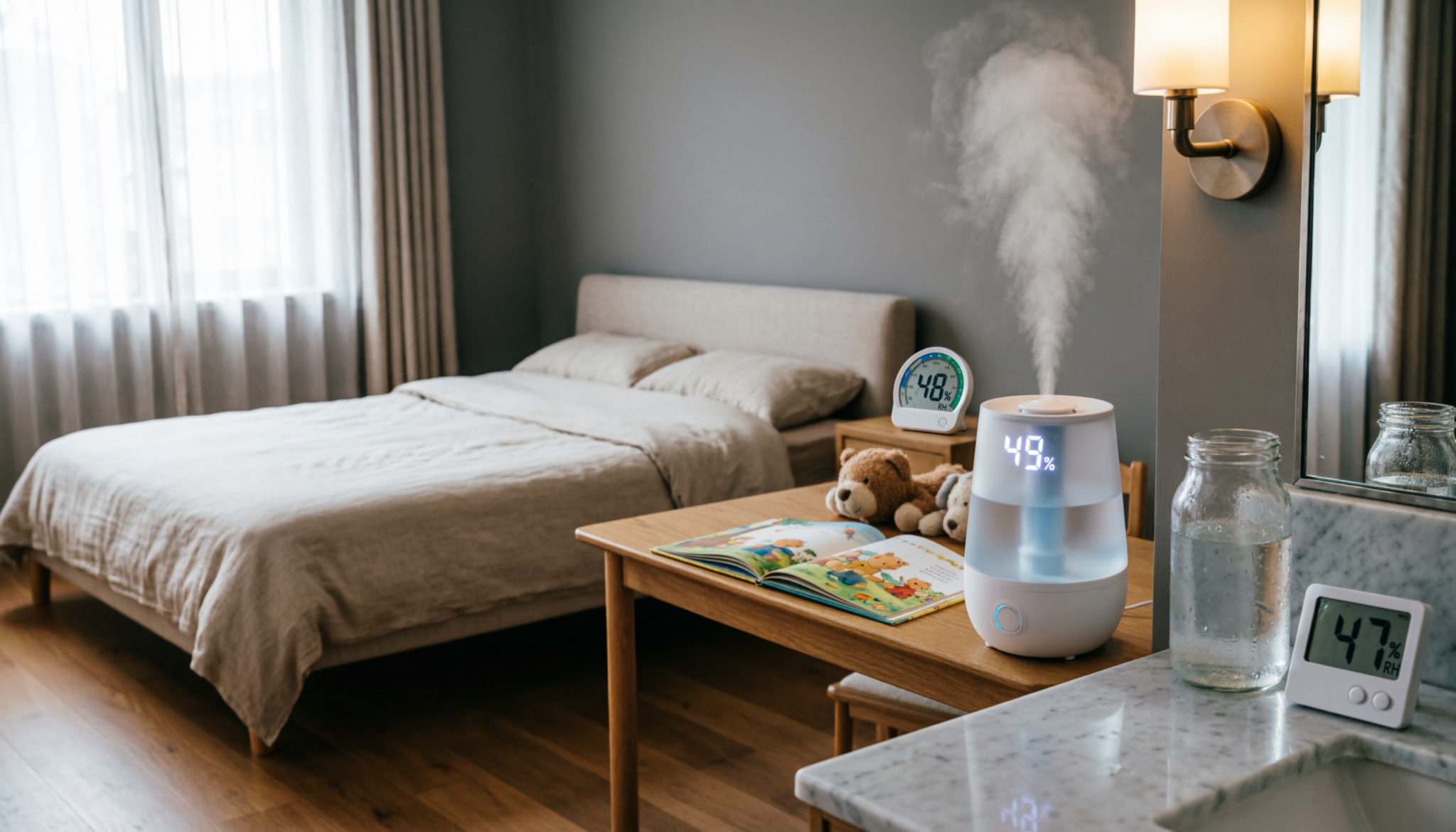
Short on time? Dust mites require ambient humidity above 50% to absorb water through the exoskeleton and maintain reproduction. Relative humidity between 35% and 50% interrupts egg viability, slows colony growth, and lowers airborne allergen concentration. Moisture control functions as a respiratory intervention, not cosmetic home maintenance.
The Humidity Survival Matrix
| Relative Humidity Level | Dust Mite Biological Activity | Respiratory Risk Level |
|---|---|---|
| Above 60% | Rapid reproduction and allergen expansion | High asthma and rhinitis trigger load |
| 50% to 60% | Stable colony survival and fecal particle accumulation | Persistent airway inflammation |
| 35% to 50% | Dehydration stress and reproductive suppression | Reduced allergen aerosolization |
The Moisture Dependence Mechanism: Why Dust Mites Cannot Survive Dry Air
Dust mites lack internal water-retention efficiency. Exoskeleton permeability creates continuous moisture loss into surrounding air.
Atmospheric humidity functions as the primary hydration source. Relative humidity below 50% interrupts metabolic hydration and reproductive cycling.
Bedroom environments create ideal survival conditions because mattress foam, body heat, perspiration, and restricted airflow generate localized moisture pockets.
A mattress surface may register 5% to 10% higher humidity than surrounding room air during overnight occupancy. Colony expansion accelerates under these microclimate conditions.
Humidity control changes the biological equation. Lower moisture availability reduces egg hatch rates, decreases fecal pellet production, and limits allergen accumulation inside fabrics and carpeting.
Medical literature consistently associates indoor humidity above 50% with elevated concentrations of Dermatophagoides allergens, including Der p 1 and Der f 1.
These proteins trigger immune sensitization, airway inflammation, eczema flares, sinus congestion, and chronic nocturnal coughing.
Water Activity and Allergen Amplification
Dust mite survival depends on “water activity,” not visible dampness. A room may appear dry while maintaining enough microscopic surface moisture for colony persistence.
Soft materials create moisture reservoirs:
- Mattresses
- Upholstered furniture
- Heavy curtains
- Carpet padding
- Fabric headboards
Airborne allergen release increases during physical disturbance. Walking, sitting, bed movement, or vacuum agitation aerosolizes fecal fragments and mite body particles into the breathing zone.
Most allergenic particles measure between 10 and 24 microns. Respiratory deposition occurs inside nasal passages, bronchi, and upper lung structures. Chronic exposure increases immune hypersensitivity over time.
Humidity reduction lowers airborne allergen generation at the source instead of masking symptoms afterward.
Vapor Pressure Deficit: The Hidden Driver of Dust Mite Collapse
Dust mite physiology depends on equilibrium between internal hydration and surrounding vapor pressure. Dry indoor air increases evaporative stress across the exoskeleton.
Relative humidity below 50% creates a vapor pressure deficit large enough to accelerate dehydration beyond recovery capacity.
Several environmental variables intensify this effect:
- Winter heating systems
- Continuous air conditioning
- High ventilation rates
- Desiccant dehumidification
- Solar heat gain near windows
Dust mite mortality rises sharply once prolonged dehydration disrupts feeding and reproductive metabolism.
Short-term humidity spikes still create risk. Bathrooms, laundry areas, and poorly ventilated bedrooms often exceed 60% humidity overnight. Repeated daily exposure allows surviving colonies to rebound quickly.
Consistent humidity control matters more than temporary reductions.
The Bedroom Reservoir Effect: Why Mattresses Become Biological Incubators
A mattress functions as a humidity-retention chamber. Heat, sweat vapor, skin flakes, and compressed airflow create stable conditions for dust mite survival.
An average human sheds millions of skin cells daily. Keratin accumulation inside mattresses and bedding supplies continuous nutritional input.
High-density foam compounds the problem. Reduced ventilation traps moisture deeper inside internal layers. Pillow cores and comforters also accumulate humidity during overnight respiration.
Common warning signs include:
- Morning nasal congestion
- Chronic throat irritation
- Nighttime wheezing
- Persistent dry coughing
- Facial pressure upon waking
Humidity reduction below 50% weakens the environmental stability required for sustained infestation.
HVAC Oversizing: The Hidden Humidity Failure
Many modern HVAC systems cool air rapidly but remove insufficient moisture. Oversized systems reach target temperature before adequate dehumidification occurs.
Result: cold indoor air with elevated relative humidity.
This condition creates a false perception of dryness while supporting allergen survival.
Warning indicators include:
- Cool but clammy rooms
- Condensation near vents
- Musty textile odors
- Damp bedding sensation
- Indoor humidity above 55% despite air conditioning
Proper latent-load management matters more than temperature reduction alone.
Variable-speed compressors and longer cooling cycles generally improve moisture extraction efficiency. Dedicated dehumidification systems provide more stable control during humid seasons.
Expert Insight
Hygrometer placement determines measurement accuracy. Nightstand-level readings often underestimate mattress-surface humidity by 5% or more.Fabric reservoirs retain moisture long after ambient air appears dry. Continuous humidity monitoring near bedding zones provides better respiratory-risk assessment than single-wall thermostat measurements.
Atmospheric Stratification: Why Humidity Pools Near Sleeping Surfaces
Indoor air does not maintain uniform moisture distribution. Limited circulation allows humid air pockets to form around beds, carpets, and upholstered furniture.
Low airflow zones accumulate:
- Exhaled moisture
- Perspiration vapor
- Fabric-retained humidity
- Warm boundary-layer air
Children face elevated exposure risk because sleeping height and floor proximity increase contact with settled allergen reservoirs.
Carpeted bedrooms worsen the effect. Carpet fibers trap skin flakes, moisture, fungal spores, and mite allergens simultaneously.
Hard flooring reduces reservoir capacity and lowers allergen persistence after cleaning.
Seasonal Humidity Swings and Immune Stress
Summer humidity creates obvious dust mite risk, but transitional seasons often produce overlooked exposure spikes.
Rainfall, nighttime cooling, and inadequate ventilation raise indoor moisture even without visible condensation.
Basements and closed bedrooms frequently maintain persistent humidity above 55%.
Immune systems exposed to continuous low-dose allergens may develop chronic inflammatory responses rather than acute symptoms alone.
Potential long-term consequences include:
- Persistent asthma sensitization
- Chronic sinus inflammation
- Sleep disruption
- Reduced lung-function efficiency
- Increased eczema severity
Humidity management therefore functions as exposure prevention, not merely comfort optimization.
Why “Clean Homes” Still Produce Allergy Symptoms
Visual cleanliness does not equal low allergen concentration.
Dust mites thrive deep inside porous materials beyond surface cleaning reach. Standard sweeping and dry dusting may increase airborne allergen levels temporarily through aerosolization.
Humidity reduction targets biological survival directly.
Medical-grade environmental control typically combines:
- Relative humidity between 35% and 50%
- HEPA filtration
- Mattress encasements
- Hot-water fabric sanitation
- Controlled ventilation
- Reduced textile clutter
No single intervention fully resolves allergen burden alone.
FAQs
1. Does low humidity kill dust mites immediately?
No. Colony decline occurs gradually through dehydration stress and reproductive interruption. Sustained humidity below 50% weakens survival conditions over weeks rather than hours.
2. Can air conditioning alone control dust mites?
Not always. Oversized or short-cycle systems may cool rooms without removing enough moisture. Hygrometer verification remains essential.
3. Why do allergy symptoms worsen at night?
Mattress humidity, prolonged airway exposure, fabric disturbance, and concentrated allergen reservoirs increase nighttime inhalation exposure near sleeping surfaces.
Final Take
Dust mite control depends less on aggressive cleaning and more on atmospheric moisture regulation. Relative humidity above 50% supports hydration, reproduction, and allergen expansion inside fabrics and bedding.
Stable humidity between 35% and 50% disrupts biological survival pathways, lowers airborne allergen concentration, and reduces chronic respiratory stress across indoor environments.