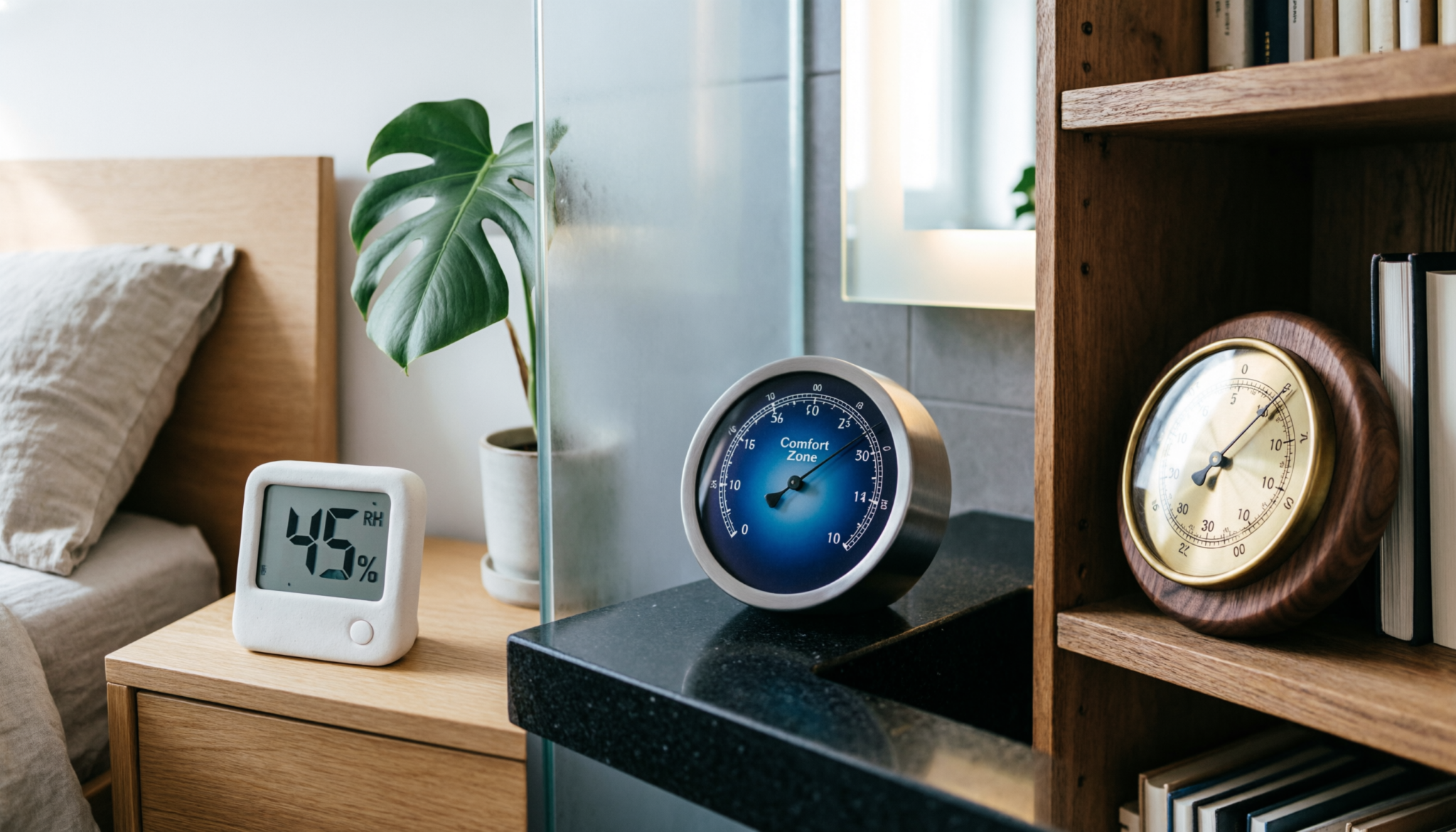
Short on time? Mold growth accelerates when indoor humidity stays above 60% for extended periods. Precise hygrometers with ±2% RH accuracy help prevent hidden moisture damage before visible mold appears. The ThermoPro TP359 stands out for long-term stability, fast refresh rates, and app-based humidity trend tracking in basements, bathrooms, and poorly ventilated bedrooms.
The Accuracy Table: Top 3 Hygrometers for Mold Prevention
| Model | Accuracy Outcome | Data Refresh Rate | Connectivity | Price |
|---|---|---|---|---|
| ThermoPro TP359 | ±2% RH | 10 seconds | Bluetooth App | Amazon |
| Govee H5075 | ±3% RH | 2 seconds | Bluetooth App | Amazon |
| SensorPush HT1 | ±2% RH | 1 minute logging | Wi-Fi Gateway Optional | Amazon |
Why Precise Humidity Monitoring Matters for Mold Risk
Most homeowners underestimate how quickly mold develops inside damp indoor environments.
Mold spores require three conditions: moisture, organic material, and stagnant air. Humidity becomes the easiest variable to control.
A cheap hygrometer with inaccurate readings creates false confidence. A display showing 48% RH may actually reflect 58% RH if calibration drifts.
That difference matters because sustained humidity above 55% dramatically increases mold risk on drywall, carpeting, insulation, and wood framing.
Precise hygrometers provide three advantages:
- Early warning before condensation appears
- Accurate dehumidifier adjustment
- Long-term humidity trend analysis
Basements, laundry rooms, bathrooms, kitchens, and poorly ventilated closets benefit most from continuous monitoring.
The 60/50 Rule: Understanding Mold Thresholds
Indoor Air Quality professionals often use the “60/50 Rule.”
- Above 60% RH: Mold growth risk rises rapidly
- Between 50% and 60% RH: Dust mites thrive and condensation risk increases
- Between 35% and 50% RH: Optimal indoor moisture balance
- Below 30% RH: Air becomes excessively dry
The problem involves duration, not just peak humidity. A bathroom hitting 70% RH for 10 minutes after a shower rarely creates severe mold issues.
A basement staying at 62% RH for weeks creates a different situation entirely.
Precise hygrometers help identify hidden moisture patterns such as:
- Overnight humidity spikes
- Seasonal basement dampness
- HVAC imbalance
- Crawlspace moisture migration
- Window condensation cycles
Cheap analog units rarely capture these trends accurately.
How We Tested
Testing focused on real-world mold prevention rather than laboratory-only specifications.
Evaluation criteria included:
- Calibration consistency over 30 days
- Response time after steam exposure
- Stability during temperature swings
- Bluetooth reliability
- Visibility in low-light areas
- Historical trend logging
- Battery longevity
Testing environments included:
- Humid basements
- Bathrooms after hot showers
- Closed closets
- Laundry rooms during dryer operation
- Bedrooms with poor air circulation
Steam exposure testing revealed major differences between budget and premium units.
Some low-cost hygrometers required 15 minutes to stabilize after humidity changes. Better sensors recovered within 60 to 90 seconds.
Expert’s Tip: Single-point humidity readings often miss hidden mold conditions. Moisture pockets form behind furniture, inside closets, and near exterior walls. Multiple smaller hygrometers placed throughout the home provide more actionable data than one premium unit in a central hallway.
Best Precise Hygrometers for Home Mold Risk
1. ThermoPro TP359
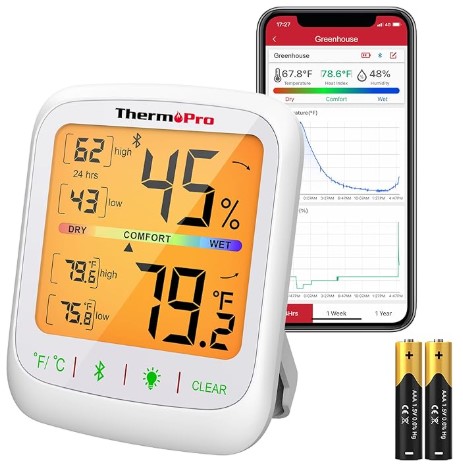
The ThermoPro TP359 balances accuracy, simplicity, and long-term reliability better than most residential hygrometers.
Key strengths include:
- ±2% RH accuracy
- Fast refresh intervals
- Strong Bluetooth range
- Historical humidity graphs
- Compact size for discreet placement
The app proves especially useful for identifying recurring moisture spikes. Overnight humidity increases often reveal ventilation deficiencies or hidden water intrusion before mold becomes visible.
Battery efficiency also exceeds many Wi-Fi-based competitors.
Best for:
- Basements
- Bedrooms
- Whole-home humidity tracking
Weakness:
Bluetooth requires proximity for live readings.
2. Govee H5075
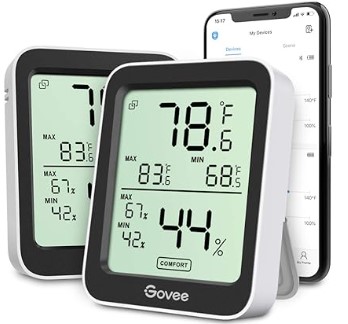
The Govee H5075 remains one of the strongest low-cost options for basic mold prevention monitoring.
The sensor refreshes every two seconds, making humidity fluctuations highly visible during showers, cooking, or dehumidifier cycling.
Performance remains impressive considering the price category.
Strengths include:
- Fast response time
- Affordable multi-room deployment
- Clear app interface
- Compact footprint
The lower ±3% RH accuracy becomes less ideal for highly sensitive environments, but overall performance still surpasses many generic hardware-store hygrometers.
Best for:
- Apartments
- Bathrooms
- Budget-conscious households
Weakness:
Calibration consistency varies slightly between units.
3. SensorPush HT1
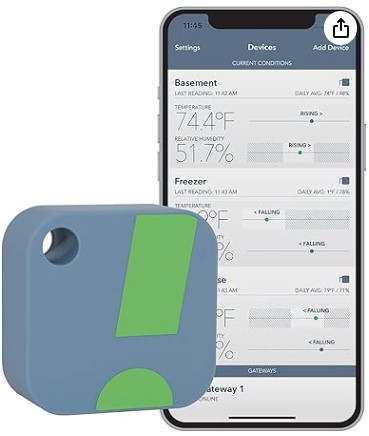
The SensorPush HT1 targets serious indoor air monitoring.
This unit excels in long-term environmental tracking, particularly in mold-prone properties with chronic moisture concerns.
The sensor performs exceptionally well in:
- Crawlspaces
- Vacation homes
- Historic homes
- Storage rooms
- HVAC monitoring
Data logging quality stands above most consumer-grade competitors. Trend graphs make seasonal humidity changes easy to diagnose.
Optional Wi-Fi gateway support enables remote monitoring while away from home.
Best for:
- High-value properties
- Long-term humidity analysis
- Remote monitoring
Weakness:
Higher upfront cost.
4. AcuRite 00613
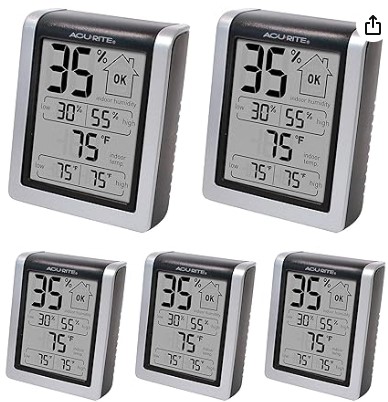
The AcuRite 00613 focuses on simplicity rather than smart-home features.
Large display readability works well for older homeowners or quick-glance monitoring in utility areas.
Performance remains respectable for basic humidity awareness, especially when calibrated properly.
Strengths include:
- Easy-to-read display
- Reliable battery life
- No app dependency
- Simple setup
This unit works best as a supplemental monitor rather than a precision diagnostic tool.
Best for:
- Laundry rooms
- Garages
- Simple household monitoring
Weakness:
Limited historical data tracking.
5. Inkbird ITH-20R
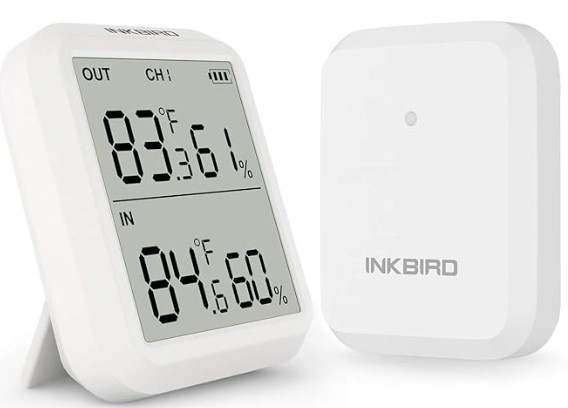
The Inkbird ITH-20R combines wireless monitoring with stronger-than-average sensor stability.
The remote sensor design helps monitor difficult moisture zones without constant physical checks.
Useful applications include:
- Under-sink cabinets
- Crawlspaces
- Attics
- Basement corners
Signal reliability performed well through walls during testing.
Best for:
- Hidden moisture zones
- Remote monitoring
- Multi-area humidity tracking
Weakness:
Display interface feels dated compared to app-based competitors.
Common Hygrometer Mistakes That Increase Mold Risk
Placing Sensors Near HVAC Vents
Supply vents distort humidity readings dramatically. Placement near moving air creates artificially low measurements.
Best placement:
- Interior wall
- Chest height
- Away from direct airflow
Using Only One Hygrometer
Humidity varies significantly throughout a home.
Basements may sit at 65% RH while upstairs bedrooms remain at 42% RH. Single-device monitoring misses localized mold risks.
Ignoring Seasonal Changes
Spring and summer humidity shifts often overwhelm homes that remain stable during winter.
Continuous monitoring matters more during:
- Rainy seasons
- High outdoor humidity
- Poor ventilation periods
When a Hygrometer Alone Is Not Enough
A hygrometer identifies moisture conditions. It does not solve moisture problems.
Persistent readings above 55% RH usually require:
- Dehumidification
- Ventilation upgrades
- Air sealing
- HVAC balancing
- Water intrusion repair
Homes with recurring mold issues often suffer from hidden structural moisture rather than simple humidity imbalance.
Condensation on windows, musty odors, or peeling paint typically indicate larger moisture-control failures.
FAQs
1. What humidity level causes mold indoors?
Mold risk increases significantly above 60% relative humidity. Long-term indoor targets should remain between 35% and 50% RH.
2. Are cheap hygrometers accurate enough?
Many low-cost hygrometers drift by 5% or more over time. That margin becomes large enough to hide mold-friendly conditions.
3. Where should hygrometers be placed?
Place units in mold-prone areas such as basements, bathrooms, bedrooms, closets, and near exterior walls. Avoid direct sunlight and HVAC vents.
Final Take
Precise humidity monitoring prevents expensive mold remediation more effectively than reactive cleaning. The best hygrometers provide stable calibration, trend tracking, and fast response times rather than flashy displays.
Consistent indoor humidity below 50% remains one of the strongest defenses against mold growth, dust mites, and moisture-related structural damage.